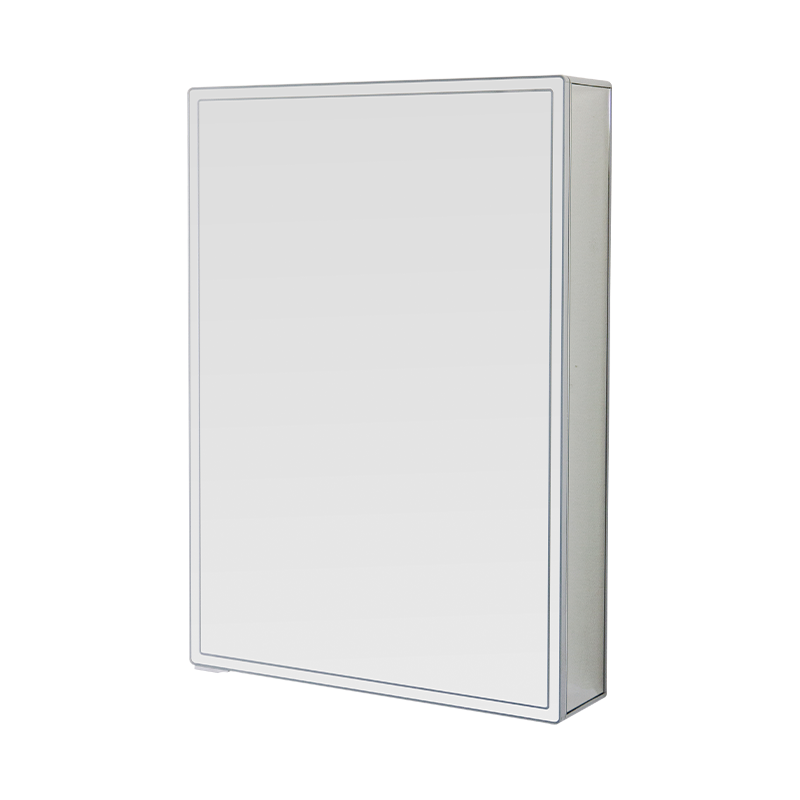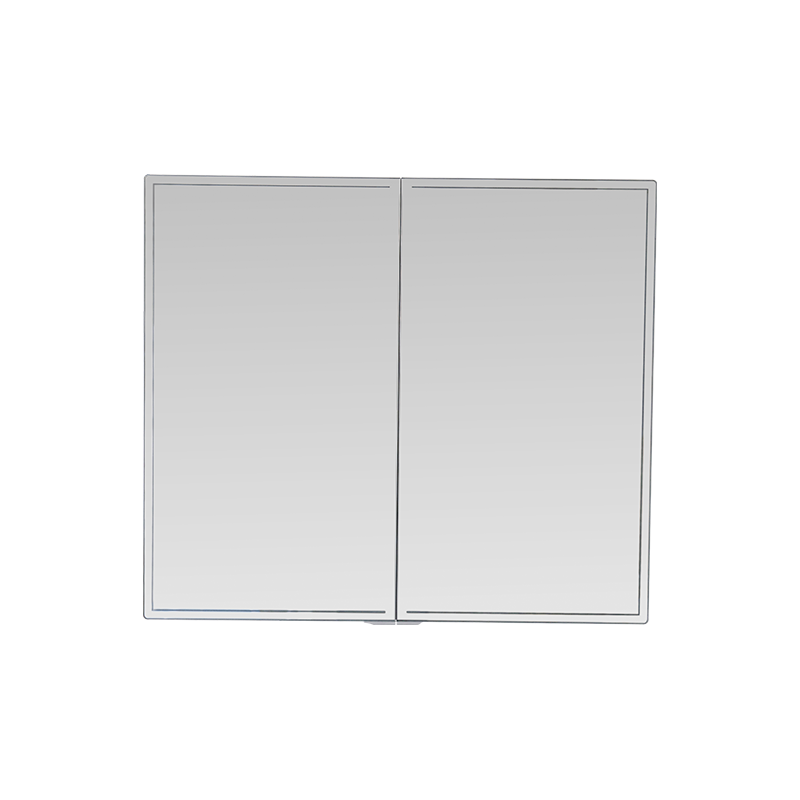

Straight Answer
For most household sinks, a Single Door Mirror Cabinet sized 400mm to 500mm wide and 600mm to 700mm tall gives the best balance of storage and wall coverage. Aluminum frames outlast steel in humid rooms, and a built in LED strip rated 3000K to 4000K reads skin tone more accurately than a plain unlit door.
130mm
Ideal cabinet depth for everyday toiletries
4000K
Neutral LED tone for makeup and shaving
IP44
Minimum splash rating near a sink area
Why Sizing Comes Before Style
Homeowners often choose a mirror cabinet by finish first and size second, then discover it overhangs the sink or leaves an awkward gap above the vanity backsplash. Sizing should start with the sink itself, not the wall. Measure the outer edge of the basin, then add clearance on each side so the cabinet frames the sink instead of floating off center.
A general industry rule used by fixture retailers is to keep the cabinet width within 80 percent to 110 percent of the sink width. Going narrower makes the mirror feel disconnected from the vanity, while going much wider can crowd a side wall or window trim.
| Vanity Type | Sink Width | Cabinet Width | Cabinet Height |
| Corner or powder room basin | 350mm to 420mm | 350mm to 400mm | 500mm to 550mm |
| Standard single vanity | 450mm to 600mm | 400mm to 500mm | 600mm to 700mm |
| Wide countertop basin | 600mm to 750mm | 500mm to 600mm | 700mm to 800mm |
Depth is the dimension most people skip during measuring, yet it decides how much storage the unit actually holds. A depth under 120mm forces bottles to lie sideways, while anything past 150mm starts to protrude noticeably into a narrow bathroom walkway. Field data from several fixture suppliers shows 130mm to 140mm depth accommodates roughly nine out of ten common bathroom items upright, including standard toothpaste tubes, shaving cream cans and most skincare bottles under 200ml.
Aluminum Or Steel, Which Frame Actually Holds Up
Bathroom hardware sits in a cycle of steam, splash and temperature swings every single day, so frame material has more impact on lifespan than color or handle style. The two dominant choices on the market are anodized aluminum alloy and powder coated cold rolled steel.
Aluminum Frame
- Forms a natural oxide layer that resists corrosion without extra coating
- About 30 percent lighter, easier to hang on plasterboard with standard anchors
- Holds paint and anodized finishes evenly for years
- Slightly higher shelf price than steel equivalents
Steel Frame
- Relies on an unbroken powder coat; a scratch can expose bare metal to rust
- Heavier build, sometimes needs reinforced wall fixings
- More rigid feel for larger double or triple door units
- Usually the more budget friendly option upfront
For a room with a shower and no extractor fan running constantly, aluminum is the safer long term pick. Steel can still perform well in drier climates or bathrooms with strong ventilation, but any nick in the coating should be touched up quickly to stop moisture reaching the base metal.
Single Door Mirror Cabinet LED Lighting Options
Lighting changes how a mirror cabinet functions day to day far more than the frame material does. Three configurations are common on current single door models.
| Lighting Type | Placement | Best Use |
| Perimeter LED strip | Runs around the mirror edge | Even, shadow free light for makeup and shaving |
| Top and bottom bar | Fixed above and below the door | Simpler wiring, brighter direct downlight |
| Sensor activated strip | Triggered by motion or door open | Night use without a wall switch search |
Color temperature matters as much as brightness. Warm light around 2700K flatters skin but can mask uneven tone, while cool light above 5000K can look clinical and slightly blue. A neutral 3000K to 4000K range is the closest match to daylight and is what most professional makeup mirrors use, which is why it has become the default spec on mid range and premium mirror cabinets alike. Look for a minimum splash rating of IP44 on any cabinet with built in lighting, since the fixture sits directly above a water source.
What To Look For When Buying A Single Door Mirror Cabinet
Beyond size, material and lighting, a handful of smaller details separate a cabinet that lasts a decade from one that needs replacing within two years.
Hinge Quality
Soft close hinges rated for at least 30,000 open cycles prevent the door from sagging or slamming against the wall over time.
Shelf Adjustability
Look for at least two adjustable glass shelves so tall bottles and small jars can both be stored without wasted vertical space.
Mirror Coating
A copper free, lead free silver backing resists the black edge spotting that low grade mirrors develop after a year or two of steam exposure.
Mounting Method
Confirm whether the cabinet is surface mounted or recessed into the wall cavity, since recessed units need the stud spacing checked before purchase.
Ventilation Slots
Small vents at the back of the cabinet reduce trapped moisture, which lowers the chance of mildew forming on the inside shelves.
Placement And Installation Notes
Center the cabinet horizontally over the sink rather than the vanity cabinet below it, since the two are not always aligned in older bathrooms. A comfortable mirror height places the bottom edge roughly 100mm to 130mm above the tap, and the center of the mirror close to eye level for the tallest regular user of the room.
If the cabinet includes an LED driver, confirm the wall has access to a switched fused spur or a low voltage transformer point before ordering, since retrofitting power after the wall is tiled adds significant cost. For a rental property or a bathroom where drilling into tile is not an option, a plug in LED version with a surface mounted transformer avoids the need for hardwired electrics entirely.
Matching The Cabinet To Daily Use
A single occupant bathroom can work well with a narrower 350mm to 400mm cabinet, since storage needs are lighter. A shared family bathroom benefits from the 500mm to 600mm range with three shelves, giving each household member a defined area for their own items. For a guest bathroom used only occasionally, a compact unlit cabinet is often enough, saving the added cost of LED wiring for a space that rarely needs it.