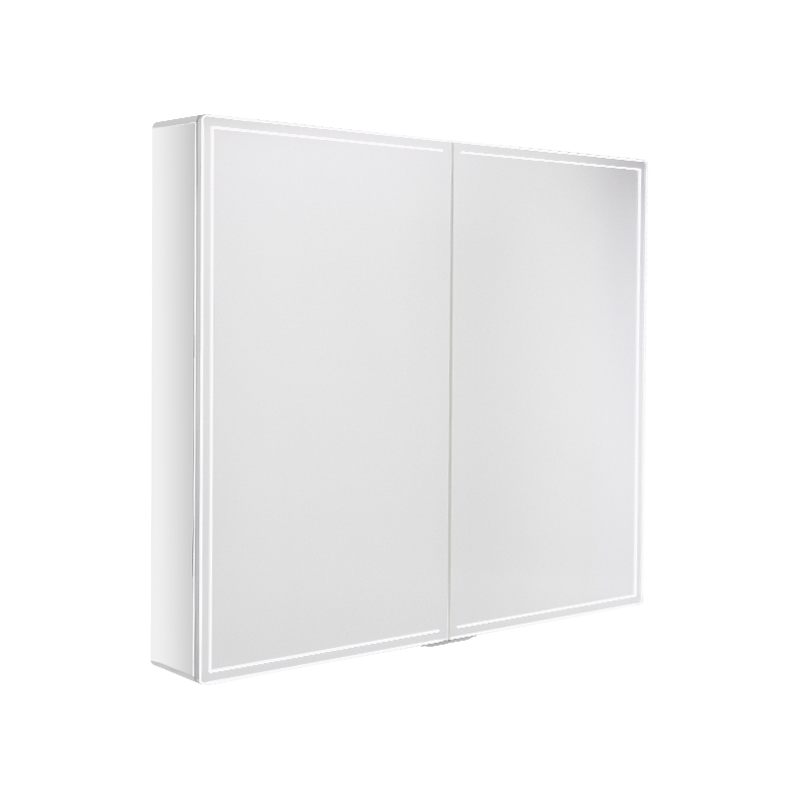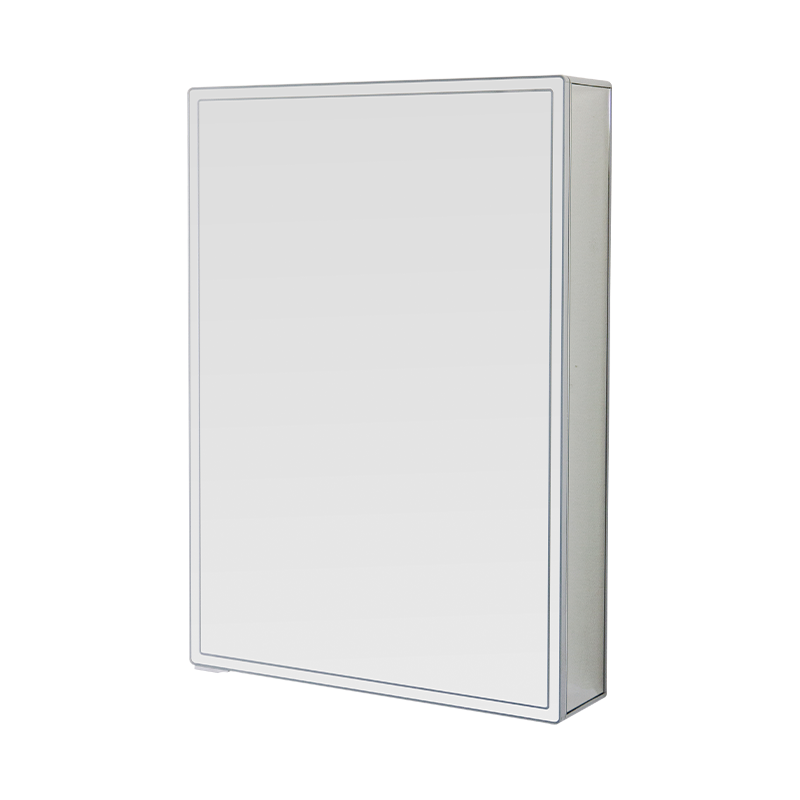

A Double Door Mirror Cabinet is a wall-mounted bathroom fixture that pairs a mirrored viewing surface with an enclosed storage compartment behind two hinged doors. It is specified across hotel bathrooms, residential renovations, and commercial washrooms where a wider mirror and larger internal storage volume are needed than a single door unit or a plain mirror can offer.
Single vs Double Door Mirror Cabinets for Hotel Bathrooms
Hotel bathroom specifications often need to weigh mirror width, storage volume, and per-unit cost across a large number of identical rooms. A single door cabinet suits compact guest rooms where wall width is limited and cost efficiency across many rooms is a priority. A double door cabinet is more often specified in suites, accessible rooms, or bathrooms intended for two occupants, where a wider mirror and separated storage compartments justify the additional wall width and hardware cost.
| Comparison Point | Single Door Cabinet | Double Door Cabinet |
|---|---|---|
| Mirror width | Narrower, fits compact vanities | Wider, suited to shared or larger vanities |
| Storage volume | Single compartment | Two compartments, often independently adjustable |
| Wall width required | Lower | Higher |
| Simultaneous access | One user at a time | Two doors allow separated or parallel access |
| Typical project fit | Standard guest rooms | Suites, shared bathrooms, wider vanity counters |
Bathroom Mirror Cabinets: How to Choose the Right Mirror Cabinet
Selecting a mirror cabinet configuration generally comes down to matching the unit to the wall space, the storage requirement, and how the fixture will be accessed. The following considerations are commonly reviewed before a specification is finalized.
- Wall width and depth. Confirm the available wall width for the cabinet footprint, and check whether a recessed installation is feasible given the wall cavity depth.
- Storage requirement. Estimate how many items need to be stored behind the mirror and whether separated compartments would help organize toiletries, medication, or grooming items.
- Mounting method. Decide between recessed, semi-recessed, and surface-mounted formats depending on whether the wall can be modified.
- Hinge and hardware quality. Review hinge type, particularly for high-frequency use environments such as hotels, where soft-close hardware reduces wear and noise.
- Moisture exposure. Match the cabinet's moisture resistance rating to its proximity to a shower, bath, or basin splash zone.
Construction and Working Principle
A double door mirror cabinet is built around a frame or carcass, two mirrored door panels connected by hinges, and an internal cavity divided by fixed or adjustable shelves. The mirror panels are made from silvered glass bonded to a protective backing layer, which helps limit moisture penetration in a bathroom environment where humidity and condensation are routine.
Hinges are typically concealed or semi-concealed so the doors sit flush against the frame when closed, while still allowing full access to the interior. Soft-close hinge mechanisms are increasingly used in projects where the cabinet will be opened and closed many times a day, since they reduce both noise and long-term wear on the hardware.
Internal shelving is most often tempered glass or coated metal, both of which hold up better against moisture than untreated wood composites. Adjustable shelf pegs or clips allow the internal layout to be reconfigured for taller items such as lotion bottles or shaving equipment.
Technical Specifications
The specifications below outline the categories most commonly referenced when evaluating a double door mirror cabinet for a project.
| Specification | Typical Range or Detail |
|---|---|
| Overall width | 600 mm to 900 mm for standard double door formats |
| Cabinet depth | 120 mm to 150 mm depending on internal shelf design |
| Mirror glass thickness | 4 mm to 6 mm tempered or standard silvered glass |
| Frame material | Aluminum, stainless steel, or coated MDF |
| Shelf material | Tempered glass or powder-coated metal |
| Hinge type | Concealed, semi-concealed, or soft-close |
| Mounting method | Recessed, semi-recessed, or surface-mounted |
| Moisture resistance rating | IP44 or higher recommended for splash zones |
Moisture resistance rating matters most for units installed close to a shower or basin, since condensation and direct water contact accelerate corrosion of hinges and frame joints when the rating is insufficient for the installation location.
What is the Difference Between a Mirrored Cabinet and a Bathroom Mirror?
A plain bathroom mirror is a flat reflective panel with no storage function, typically fixed to the wall with clips, adhesive, or a frame mount. A mirror cabinet integrates the reflective surface into a hinged door that opens to reveal storage space behind it. A plain mirror requires a separate storage solution elsewhere, such as a vanity drawer, while a mirror cabinet consolidates both functions into a single wall area, which is particularly useful in smaller bathrooms where wall space is limited. The tradeoff is added depth, since a mirror cabinet needs enough internal clearance to hold everyday items, unlike a flat mirror.
Application Scenarios
Double door mirror cabinets appear across a range of project types, each with slightly different priorities.
In hotel suites, a wider mirror supports grooming for two occupants at once. In residential renovations, storage consolidation is often the priority within a limited footprint. Commercial washrooms generally prioritize durability and low maintenance, while healthcare settings benefit from enclosed storage that helps keep personal items separated and secure.
Installation, Maintenance, and Common Oversights
Recessed installation requires the wall cavity to be prepared to the correct depth and width before the unit is set into place, typically secured with mounting brackets or screws into wall studs or blocking. Surface-mounted units are generally simpler to install, requiring wall anchors sized to the cabinet's weight once loaded with typical bathroom items.
A detail that is frequently overlooked is checking that the door swing does not interfere with adjacent fixtures such as towel bars, light fittings, or a nearby door frame when both cabinet doors are opened together. This is especially relevant in compact bathrooms where clearance is limited.
Ongoing maintenance is generally limited to wiping the mirror surface with a non-abrasive glass cleaner and periodically checking hinge tension, since repeated use over time can loosen hinge screws. In high-humidity settings, checking the seal between the mirror door and frame helps confirm moisture is not penetrating behind the glass, which can otherwise lead to silvering degradation and dark spots over time.
Industry Trends and Future Outlook
Demand in the mirror cabinet segment continues to shift toward integrated features such as built-in demisting pads, USB charging ports, and LED-edge lighting incorporated directly into the cabinet frame. For double door configurations specifically, there is an ongoing trend toward slimmer frame profiles with a larger proportion of mirrored surface relative to frame width. Hospitality projects in particular are increasingly specifying soft-close hardware as a standard feature rather than an upgrade, given how frequently these units are opened across many guest rooms.
Conclusion
A Double Door Mirror Cabinet suits projects that need a wider mirrored surface combined with a larger enclosed storage volume than a single door format or plain mirror can provide. Confirming wall dimensions, moisture exposure, hinge quality, and internal shelf layout against the intended use case helps determine whether this configuration is the right fit for a hotel suite, a residential renovation, or a commercial washroom project.
FAQ
What is a double door mirror cabinet used for?
It combines a mirrored surface with enclosed storage for toiletries, medication, or grooming items, consolidating both functions into a single wall-mounted fixture.
Is a double door mirror cabinet better than a single door version?
It depends on available wall space and storage needs. Double door units offer a wider mirror and greater storage volume, while single door units suit compact layouts and lower unit costs.
What is the difference between a mirror cabinet and a plain bathroom mirror?
A plain mirror is a fixed reflective panel with no storage, while a mirror cabinet has a hinged mirrored door that opens to reveal an internal storage compartment.
Can a double door mirror cabinet be installed in a small bathroom?
Yes, provided the available wall width accommodates the cabinet's overall width and door swing clearance is confirmed against nearby fixtures.
What moisture rating should be considered for installation near a shower?
A rating of IP44 or higher is generally recommended for cabinets installed within direct splash zones to reduce the risk of hinge and frame corrosion.
How is a recessed double door mirror cabinet installed?
A wall cavity is prepared to match the cabinet depth and width, and the unit is secured into the opening using mounting brackets or screws into wall studs or blocking.
How should the mirror surface be cleaned and maintained?
Use a non-abrasive glass cleaner on the mirror surface and periodically check hinge tension and door seals to prevent moisture penetration behind the glass.
Are adjustable shelves available inside double door mirror cabinets?
Many models include adjustable shelf pegs or clips, allowing the internal layout to be reconfigured for taller items such as bottles or shaving equipment.