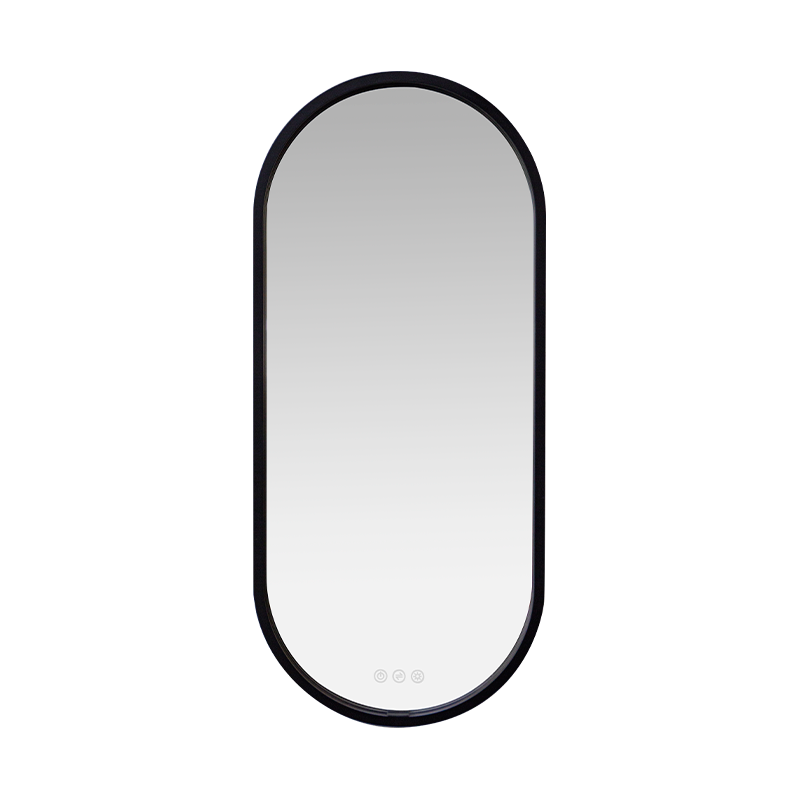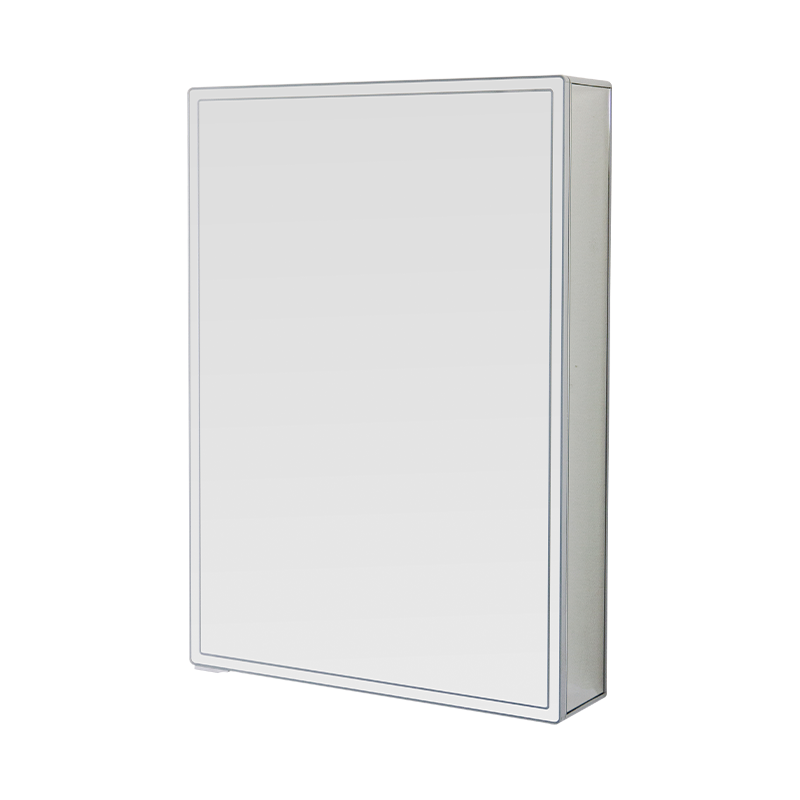

A bathroom mirror with LED is the single most impactful upgrade for a modern bathroom: it delivers consistent, shadow-free illumination, reduces energy consumption by up to 75% compared to incandescent fixtures, and lasts 30,000–50,000 hours without bulb replacements. If you want accurate grooming light and a cleaner vanity aesthetic, LED is the practical and cost-effective choice.
LED Anti-Fog Bathroom Mirror: Why the Combination Matters
Most bathrooms reach 80–90% relative humidity during a shower, which is exactly the point at which a cold mirror surface fogs over. An LED anti-fog bathroom mirror solves both problems with a single product by integrating a thin resistive heating pad behind the glass. This pad runs at a surface temperature of 40–45 degrees Celsius, just warm enough to prevent condensation without becoming a safety hazard.
How the Heating Pad Works
A low-wattage (typically 15–30W) transparent heating element bonds to the mirror backing. When activated, it raises the glass surface temperature a few degrees above the dew point, so moisture evaporates on contact rather than forming droplets. Most models tie this function to the main power switch, so the pad warms up when the lights come on.
Real-World Benefit
In independent bathroom environment tests, mirrors with anti-fog pads remained clear within 90 seconds of a hot shower, while standard mirrors took 8–12 minutes to fully clear. That difference matters when you are on a morning schedule. It also eliminates the habit of wiping the mirror with a towel, which leaves streaks and accelerates frame corrosion over time.
Look for an IP44 rating or higher on any LED mirror installed within 60 cm of a shower or bath zone. IP44 means the unit is protected against water splashes from any direction — the minimum standard for wet-zone bathroom use under IEC 60529.
Why Choose an LED Mirror Over Traditional Options?
The argument for LED mirrors is not just about aesthetics. It is about measurable performance gaps across lifespan, color accuracy, and running costs.
| Factor | LED Mirror | Hollywood Bulb Mirror | Standard Mirror + Overhead Light |
|---|---|---|---|
| Bulb Lifespan | 30,000–50,000 hrs | 1,000–2,000 hrs | Depends on fixture |
| Energy Use (per session) | ~0.01 kWh | ~0.08 kWh | ~0.06 kWh |
| Color Rendering Index | CRI 90–98 | CRI 95–100 | CRI 80–90 (varies) |
| Shadow on Face | None (wraparound or backlit) | Minimal | High (top-down cast) |
| Anti-Fog Option | Available | Not available | Not available |
| Average Cost Over 5 Years | Low (no replacements) | High (frequent bulb swaps) | Medium |
Hollywood-style bulb mirrors edge out LEDs on raw CRI, but the gap has narrowed significantly. Premium LED strips now reach CRI 95–98, which is indistinguishable in day-to-day grooming. What tips the balance is the cost of ownership: replacing incandescent globe bulbs annually in a Hollywood mirror costs roughly EUR 15–40 per year depending on the model, while an LED mirror has no consumables for its entire lifespan.
Backlit vs. Front-lit: What Is the Difference?
LED strips are mounted behind the mirror glass, projecting light outward around the perimeter. This creates a halo or glow effect on the wall and provides ambient bathroom lighting as a secondary benefit. The light reaching your face is indirect and diffused — flattering but softer.
- Ambient glow reduces contrast, making the bathroom feel larger
- Less intense on the face — better for general ambiance
- Popular in minimalist and spa-style bathrooms
- Typically lower lumen output at the mirror surface (200–600 lux)
LEDs sit at the front face of the mirror, either embedded in the glass or along the edges facing you. Light projects directly onto your face, eliminating shadows under the chin, nose, and eyes. This is the configuration recommended for precision tasks like applying makeup or shaving.
- Higher surface lux — typically 800–1,200 lux at face level
- Accurate color rendering essential for cosmetics
- May feel harsh in a dark bathroom without supplementary lighting
- The preferred choice for professional makeup artists
Color Temperature: A Decision That Changes the Room
Both backlit and front-lit mirrors come in adjustable or fixed color temperatures. The spectrum runs from 2,700K (warm white, close to candlelight) to 6,500K (cool daylight). For most bathrooms, a tunable mirror that covers 3,000K–6,000K is the most versatile option:
Maintenance and Care for LED Bathroom Mirrors
One of the underappreciated advantages of LED mirrors is how little upkeep they require. There are no bulbs to replace, no ballasts to service, and no external fixtures to dust. But the glass surface and electronics do require basic care to perform well over their full lifespan.
Use a microfiber cloth dampened with water or a glass cleaner without ammonia. Ammonia degrades the reflective coating over time. Never spray liquid directly onto the mirror; spray the cloth instead to prevent moisture entering the frame or rear panel seams.
Most LED mirror frames are aluminium or stainless steel. Wipe with a dry or lightly damp cloth. Avoid abrasive pads. If the frame is lacquered, use only pH-neutral cleaners to preserve the finish. Check edge seals annually for cracks, especially in high-humidity bathrooms.
Capacitive touch panels on LED mirrors respond to clean, dry fingertips. If the sensor becomes unresponsive, clean the panel with a dry cloth to remove soap residue or calcium buildup from hard water. Do not use any cleaning liquid on the sensor panel area.
The heating element requires no maintenance. If the anti-fog function stops working, check whether the fuse in the driver unit has blown (most units have an accessible fuse holder behind the mirror) before assuming the pad has failed. Pad failure is uncommon within the first 10 years of normal use.
Leave at least 10 mm of clearance between the back of the mirror and the wall when mounting, particularly for backlit models. This gap allows the LED driver to dissipate heat efficiently and significantly extends component life. Drivers running hot are the leading cause of premature LED dimming.
Quality LED strips experience approximately 30% lumen depreciation after 25,000 hours of use — roughly 14 years at 5 hours per day. If your mirror dims noticeably before that, the issue is typically the driver, not the LEDs. Drivers on mirrors priced under EUR 60 tend to fail within 3–5 years; drivers on mid-range and premium mirrors typically last the life of the LEDs.
What to Check Before You Buy
Not all LED mirrors are built to the same standard. Focus on these specifications when comparing options:
- IP Rating: Minimum IP44 for any zone near water; IP65 or higher for open shower areas.
- CRI Value: Look for CRI 90 or above. CRI 80 is the budget floor and will make skin tones appear slightly grey-green under artificial light.
- Dimmer Range: A 10%–100% dimming range covers all practical use cases from nighttime checks to full-brightness grooming.
- Driver Quality: Constant-current drivers produce flicker-free light. Flicker at frequencies below 100 Hz causes eye strain during extended use.
- Anti-Fog Pad Wattage: 15W is sufficient for mirrors up to 60x80 cm. Larger mirrors need 25–30W pads to cover the full surface.
- Warranty: Three years is the standard for quality mid-range mirrors. A two-year or shorter warranty on the LED components is a signal of lower-grade strip material.