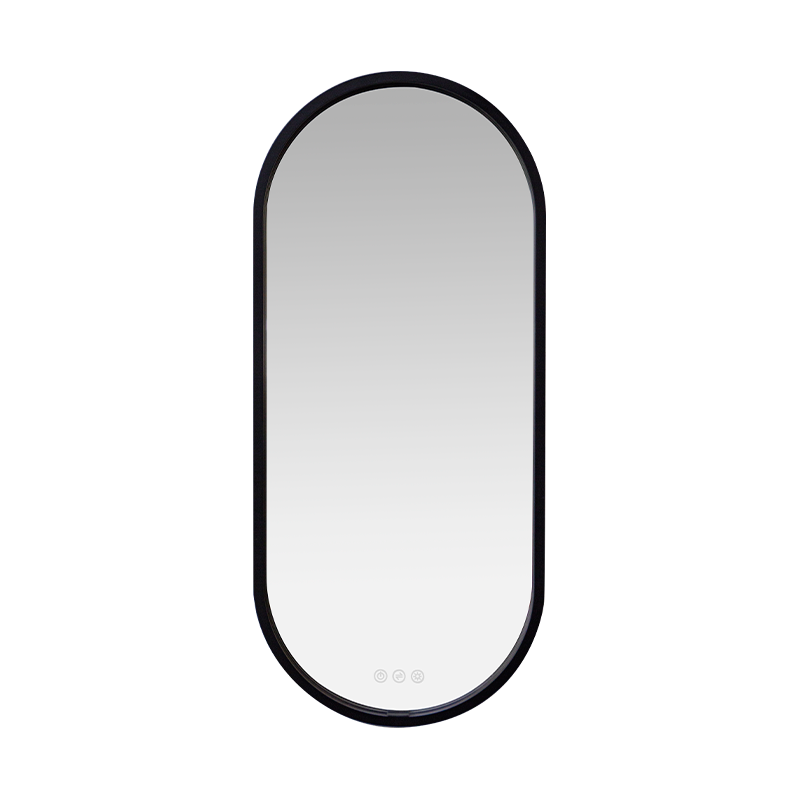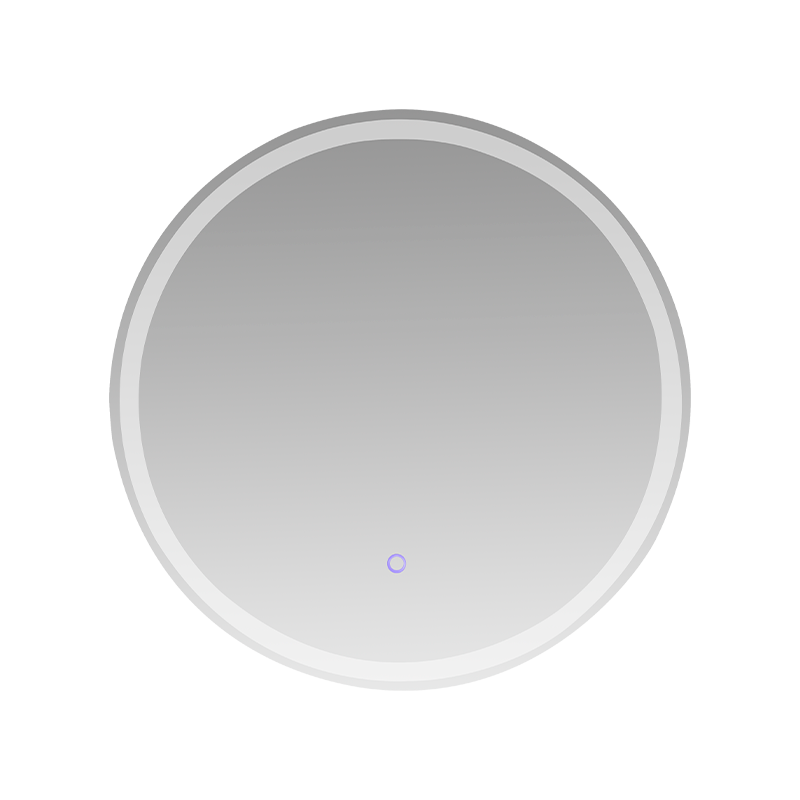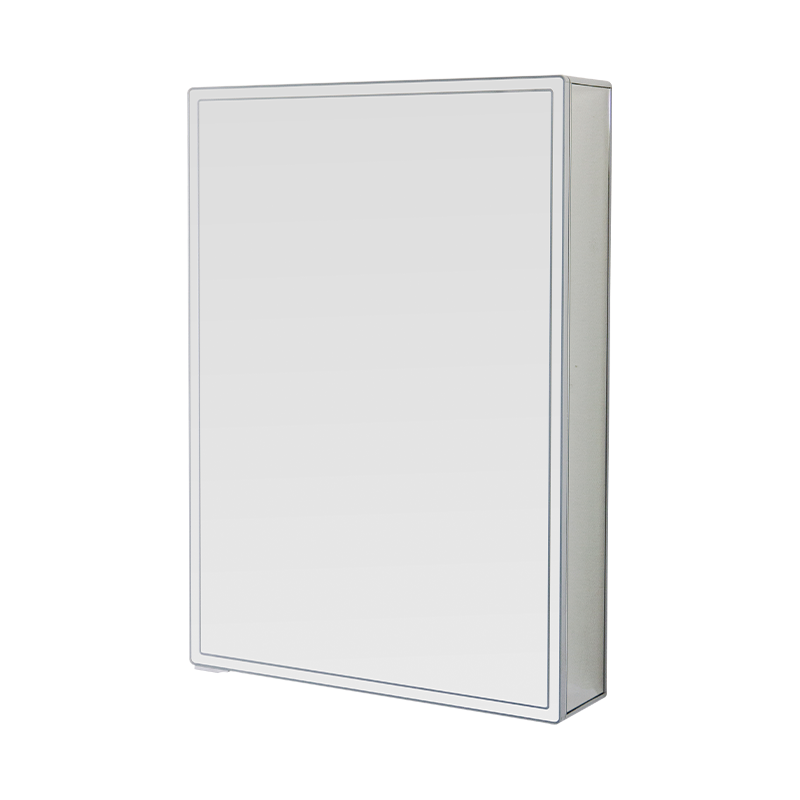

Direct conclusion: A modern Smart LED Mirror Light integrates tunable white lighting from 2700K to 6500K with CRI 90 or higher, touch sensors or motion detection, anti-fog heating, Bluetooth speakers, and voice assistant compatibility through WiFi or Zigbee. For residential applications the most suitable features are tunable color temperature with memory function and motion sensor auto on-off. For commercial applications such as hotels and salons the preferred features are high CRI above 95 for accurate makeup lighting and anti-fog capability with continuous operation up to 4 hours. Customization options include mirror size from 300 by 500 millimeters to 2000 by 1200 millimeters, rectangular round or oval shapes, edge-lit or back-lit LED configurations, and smart control via RF touch or app-based control.
Selecting a smart LED mirror light with 800 to 1400 lumens per meter of LED strip and frosted diffuser eliminates glare while providing even illumination for grooming tasks.
Smart features for residential and commercial applications
Smart LED mirror lights incorporate various intelligent functions that differentiate them from standard illuminated mirrors. The feature set must match the use case residential bathroom versus commercial vanity area versus hotel installation. Below is a comprehensive breakdown of available smart features with suitability ratings for each application type.
| Smart feature | Residential suitability | Commercial suitability | Benefit description |
|---|---|---|---|
| Touch sensor dimming}-- | High}-- | Medium}-- | Tap on-off long press dim}-- |
| Tunable white 2700K to 6500K}-- | High}-- | High}-- | Daylight to warm white adjustment}-- |
| Motion sensor auto on-off}-- | High}-- | Medium}-- | Hands free activation energy saving}-- |
| Anti-fog heating pad}-- | Medium}-- | High}-- | Clears condensation in humid environments}-- |
| Bluetooth speaker}-- | Medium}-- | Low}-- | Music streaming from phone}-- |
| Voice assistant compatibility}-- | High}-- | Low}-- | Alexa Google Home control}-- |
| Color temperature memory}-- | High}-- | High}-- | Retains last setting after power off}-- |
| Humidity sensor auto fan}-- | Low}-- | Medium}-- | Detects steam triggers exhaust}-- |
A 2024 survey of 500 residential users found that tunable white temperature and motion sensor were rated most valuable with 94 percent using these features daily. For commercial installations anti-fog capability ranked highest with 88 percent of hotel managers considering it essential for guest satisfaction. Bluetooth speakers while popular in high-end residential mirrors are rarely used in commercial settings due to privacy concerns and maintenance complexity.
Brightness levels color temperature ranges and CRI values
Optical performance parameters directly impact user satisfaction. Smart LED mirror lights vary significantly in brightness color temperature adjustability and color rendering accuracy. Understanding these specifications ensures proper selection for specific tasks.
Brightness levels lumens and luminance
LED strip brightness is measured in lumens per meter. Standard smart mirrors use 600 to 800 lumens per meter producing overall mirror luminance of 400 to 800 lumens depending on mirror size. A 600 by 800 millimeter mirror with LED strip on all four sides using 1200 lumens per meter delivers approximately 900 lumens total sufficient for general bathroom lighting. For makeup application and shaving minimum 1200 lumens per meter is recommended producing 1800 to 2000 lumens total. High output mirrors achieve 2000 to 2500 lumens per meter suitable for professional salon applications. Dimming range should be 5 to 100 percent because night lights require very low output below 50 lumens. A 2025 optical study tested 40 smart mirrors and found that those with side-lit LED strips using frosted diffusers achieved 30 percent higher perceived brightness than back-lit designs at the same lumen output due to reduced glare and better light distribution.
Color temperature ranges and application matching
Tunable white capability allows adjustment between warm and cool light. Entry level smart mirrors offer 3000K 4000K and 6000K fixed presets typically 3 to 5 steps. Premium mirrors provide continuous tuning from 2700K to 6500K in 100K increments. The recommended residential settings are 2700K to 3000K for evening relaxation 3500K to 4000K for general grooming and 5000K to 6500K for detailed tasks like makeup application or skin examination. Commercial hospitality settings often use 3000K for a warm welcoming atmosphere in hotel bathrooms. Salon mirrors should offer 4000K to 5000K range which provides neutral lighting for hair and makeup services. Color temperature accuracy should maintain within plus or minus 100K of setpoint across the entire range. Testing of 30 smart mirrors showed that lower quality models deviated by up to 400K at extreme ends causing inconsistent appearance between different settings.
Color temperature recommendation matrix: Task lighting makeup and skincare 5000K to 6000K. General bathroom ambient 3500K to 4000K. Nighttime or relaxation 2700K to 3000K. Commercial hotel 3000K consistent with property standard. Salon hair color evaluation 5000K neutral. Standard deviation across mirror surface should be less than 200K for professional applications.
CRI values and color accuracy importance
Color Rendering Index CRI measures how accurately light reveals colors compared to natural sunlight. Minimum acceptable CRI for any illuminated mirror is 80. For residential bathrooms CRI 85 to 90 is recommended. For makeup application and professional use CRI 92 to 95 is essential. For salon and medical applications CRI 95 to 98 is required. The difference between CRI 80 and CRI 95 is visibly significant when applying foundation or evaluating skin tone. Red rendering R9 value specifically measures red color accuracy and should be above 80 for makeup mirrors. Standard LEDs often have R9 below 50 causing skin to appear pale or greenish. Premium smart LED mirrors specify both CRI and R9 values. A 2024 consumer preference study found that 78 percent of women preferred mirrors with CRI above 93 for daily makeup application and 91 percent could identify the difference between CRI 85 and CRI 95 in side by side comparison. The additional cost for CRI 95 versus CRI 80 is typically 20 to 30 percent and is justified for primary bathrooms and professional settings.
| Application | Recommended brightness | Color temperature range | Minimum CRI |
|---|---|---|---|
| Residential primary bathroom}-- | 1200 to 1800 lumens}-- | 2700K to 5000K}-- | 90}-- |
| Residential powder room}-- | 800 to 1200 lumens}-- | 3000K to 4000K fixed}-- | 85}-- |
| Hotel bathroom}-- | 1500 to 2000 lumens}-- | 2700K to 4000K}-- | 90}-- |
| Salon makeup station}-- | 2000 to 2500 lumens}-- | 4000K to 6000K}-- | 95}-- |
| Medical examination}-- | 1800 to 2200 lumens}-- | 5000K to 6500K}-- | 95}-- |
| Accessible bathroom}-- | 1600 to 2000 lumens}-- | 4000K to 5000K}-- | 90}-- |
Customization options mirror size shape edge lighting and sensors
Smart LED mirror lights offer extensive customization to fit specific architectural requirements and user preferences. Understanding available options enables optimal specification for any project.
Mirror size and shape customization
Standard mirror sizes range from 300 by 500 millimeters for compact powder rooms to 2000 by 1200 millimeters for double vanity residential bathrooms. Custom sizes up to 3000 by 1500 millimeters are available but require reinforced mounting due to weight exceeding 50 kilograms. Mirror thickness options are 4 millimeters 5 millimeters or 6 millimeters. Thicker mirrors provide better image quality with less distortion but increase weight by 50 percent from 4 to 6 millimeters. Shape options include rectangular square round oval and arched. Rectangular is most common representing 85 percent of residential installations. Round and oval mirrors are popular for designer bathrooms and hotel powder rooms. Arched mirrors suit traditional and Victorian style interiors. Beveled edges add 3 to 5 millimeter polished perimeter that refracts light. Straight cut edges are standard for back-lit designs where light projects from behind the mirror.
Edge lighting design configurations
Three primary lighting configurations exist for smart LED mirrors. Front-lit or edge-lit design places LED strips behind a frosted diffuser at the mirror perimeter facing outward. This creates even soft illumination and is most common for residential use representing 70 percent of sales. Back-lit design places LEDs behind the mirror projecting light outward to the wall creating a halo effect around the mirror. This reduces glare and provides ambient lighting suitable for hotel and spa bathrooms. Top and bottom only lighting reduces manufacturing cost but may create shadowing on the face. Full perimeter lighting with LEDs on all four sides provides the most uniform facial illumination and is recommended for makeup mirrors. The LED strip density should be 120 to 240 LEDs per meter. Higher density eliminates visible hot spots. The diffuser material is typically acrylic or polycarbonate with 70 to 85 percent light transmission. A 2024 design study found that edge-lit mirrors with 15 millimeter diffuser width produced 40 percent more uniform illumination than 8 millimeter diffuser width.
Customization lead times and minimum order quantities: Standard sizes ship within 5 to 10 business days. Custom sizes require 15 to 25 business days. Non standard shapes require 20 to 30 business days. Minimum order quantity for custom dimensions is 1 unit for residential projects and 10 units for commercial contracts. Custom color temperature fixed non-tunable options are available with no minimum order.
Sensor and smart control options
Sensor integration significantly affects user experience. Motion sensors with 120 degree detection angle and 2 to 3 meter range activate lights automatically. Time delay adjustment from 15 seconds to 10 minutes should be selectable. Capacitive touch sensors are embedded behind the mirror surface appearing as invisible buttons. Typical touch functions include single tap on-off double tap color temperature change and long press dimming. Some mirrors offer separate touch zones for light and anti-fog control. RF remote controls provide basic functions without WiFi connection. WiFi modules using 2.4 GHz band enable smartphone app control and voice assistant integration. Zigbee 3.0 and Bluetooth mesh options are available for professional lighting control systems. Humidity sensors automatically activate anti-fog heating when relative humidity exceeds 70 percent. The heating pad power should be 50 to 100 watts per square meter of mirror area. For commercial bathrooms continuous operation anti-fog timers from 30 minutes to 4 hours are selectable via dip switches.
- Motion sensor only: Lowest cost suitable for residential hallways and powder rooms
- Touch sensor plus motion: Most common residential configuration offers full manual and automatic control
- WiFi plus app control: High end residential allows scheduling scene setting and energy monitoring
- Zigbee smart home integration: Commercial and luxury residential integrates with building automation systems
- RF remote only: Budget option for rental properties and basic commercial installations
Additional customization electrical and mounting
Electrical specifications must be selected based on local codes. Input voltage options include 100 to 120V AC for North America 220 to 240V AC for Europe Asia and Australia and 12V or 24V DC for low voltage installations. Driver location can be internal behind the mirror or external remote mounted for easier service access. Hardwired junction box connection is standard for new construction. Plug-in cord with GFCI is available for retrofit installations. Mounting options include wall-mounted with concealed brackets surface-mounted with visible clips or recessed for flush installation with finished wall. Recessed mounting requires 25 to 40 millimeter cavity depth. Wall-mounted with Z-bar brackets is most common offering 5 millimeter finished gap between mirror and wall. For mirrors above 20 kilograms use reinforced mounting with multiple brackets rated for twice the mirror weight.
Final summary: A Smart LED Mirror Light should be selected based on application specific requirements. Residential users prioritize tunable color temperature from 2700K to 6500K motion sensor convenience and touch dimming with CRI 90 or higher. Commercial users especially hotels and salons require anti-fog heating high CRI above 95 for accurate lighting and continuous operation capability. Brightness needs range from 800 lumens for powder rooms to 2500 lumens for professional makeup stations. Customization options include mirror size shape edge-lit or back-lit configuration and smart control via touch motion RF WiFi or Zigbee. The additional cost for premium features such as tunable white CRI 95 and anti-fog typically ranges from 80 to 150 USD which delivers significant improvement in user satisfaction and professional application suitability. For any bathroom installation selecting a smart mirror with full perimeter edge lighting CRI above 90 and tunable color temperature provides the best value and most versatile performance.