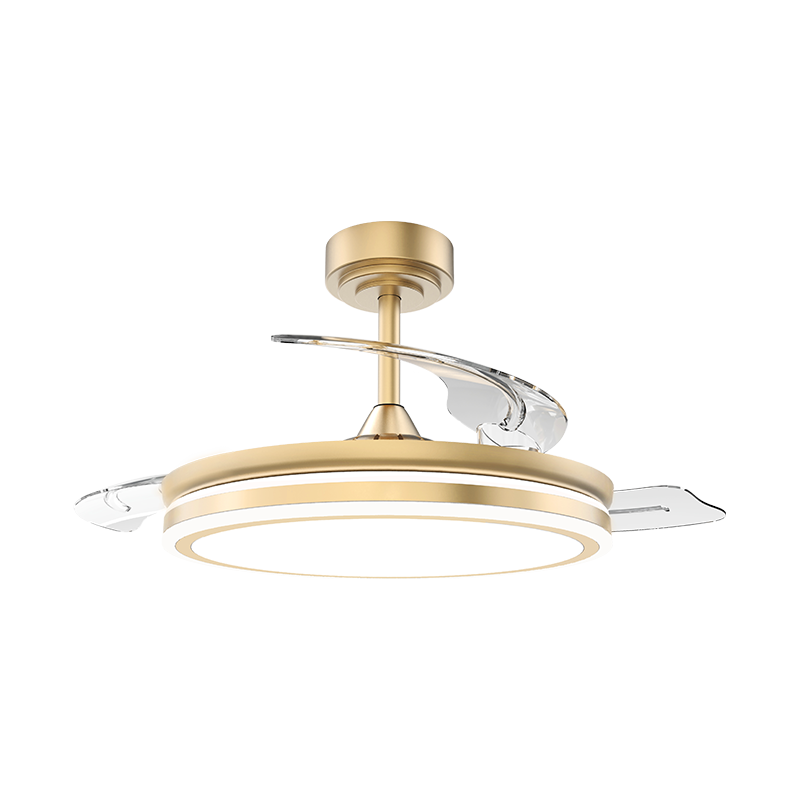

There is also a geometry problem. Bathrooms are small, so blade diameter runs smaller, ground clearance is tighter, and flush mounting almost always beats a downrod. The sections below cover the numbers that matter when you are specifying or buying.
Damp location rating decides whether a ceiling fan light belongs in a bathroom at all
If a ceiling fan light carries only a dry location rating, it should not be installed in a bathroom. A damp location rating is the minimum acceptable specification, and it is a hard line rather than a preference.
Under UL 507, ceiling fans are classified by the environment they tolerate. Dry location covers bedrooms and living rooms. Damp location means the fixture handles high humidity, occasional condensation, and indirect moisture from splashing, but not direct streams of water. Wet location is reserved for fixtures exposed to rain or direct spray.
The consequences show up in two places. Motor windings and bearing lubricant in a dry-rated fan are specified for dry air; sustained humidity degrades both, which is why bearing rumble is the first symptom. Blade coatings fail next. Once the finish lifts at the leading edge, moisture wicks into the core and the blade loses balance.
Check the label on the fan housing, not the product photo. Ratings are printed on the fixture body and repeated on the specification sheet, and a listing mark from UL or ETL is what a buyer should look for.
Match bathroom ceiling fan light size to room area and ceiling height
Most household bathrooms need a blade diameter between 30 and 44 inches with flush mounting. A downrod that looks correct in a living room will crowd an 8-foot bathroom ceiling and push the blades into head clearance.
| Bathroom area | Common footprint | Blade diameter | Mounting |
| 40 sq ft | 5 x 8 ft | 30 in | Flush mount |
| 55 sq ft | 6 x 9 ft | 36 in | Flush mount |
| 80 sq ft | 8 x 10 ft | 42 in | Flush or short downrod |
| 110 sq ft and above | 10 x 11 ft | 44 in | Downrod, 6 to 12 in |
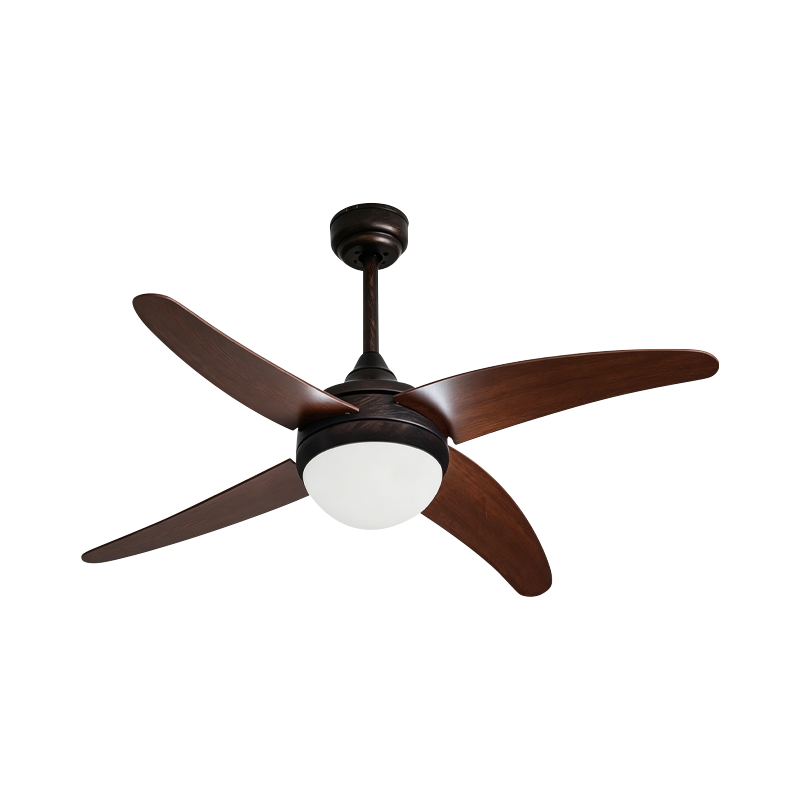
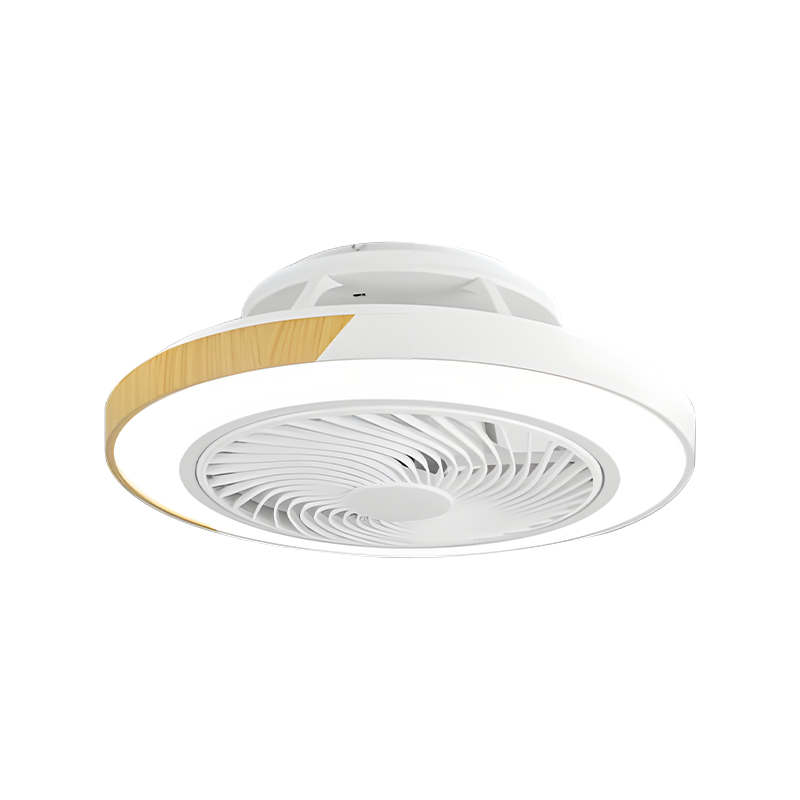 Flush Mount Ceiling Fan with LightThe Flush Mount Ceiling Fan with Light is an expertly engineered cooling solution designed specifically for low-ceiling environments where vertical space is at a premi...View Product →
Ground clearance is where bathroom installations separate from every other room. Standing inside a bathtub adds roughly 18 inches to your effective height, so an 8-foot ceiling with a downrod fan can put blades uncomfortably close to a person's head. Flush mounting removes that gap entirely and keeps the fixture inside the safe zone.
Where headroom is generous, a short downrod still helps because it moves the blades away from ceiling-level turbulence. Designs that combine integrated fan lights with combined illumination and air circulation are built for exactly this trade-off, since the light engine and motor share one housing and one ceiling cutout.
Blade material sets the service life in a humid bathroom
ABS engineered polymer is the only blade material that behaves predictably in a bathroom. Plywood and solid wood blades, even when they carry a damp location listing, will absorb moisture over time and change dimension.
- Water absorption is close to zero, so dimensions stay stable across seasons
- Color is molded through the part, so there is no surface film to peel
- Widely used on retractable and concealed-blade ceiling fan designs
- Cleaning with a damp cloth does not damage the finish
- Plywood layers absorb at different rates, which leads to delamination
- Wood-grain veneers crack and lift under repeated wet-dry cycling
- Blade balance drifts as one side of the blade takes on moisture
- Better suited to dry rooms such as bedrooms and dining areas
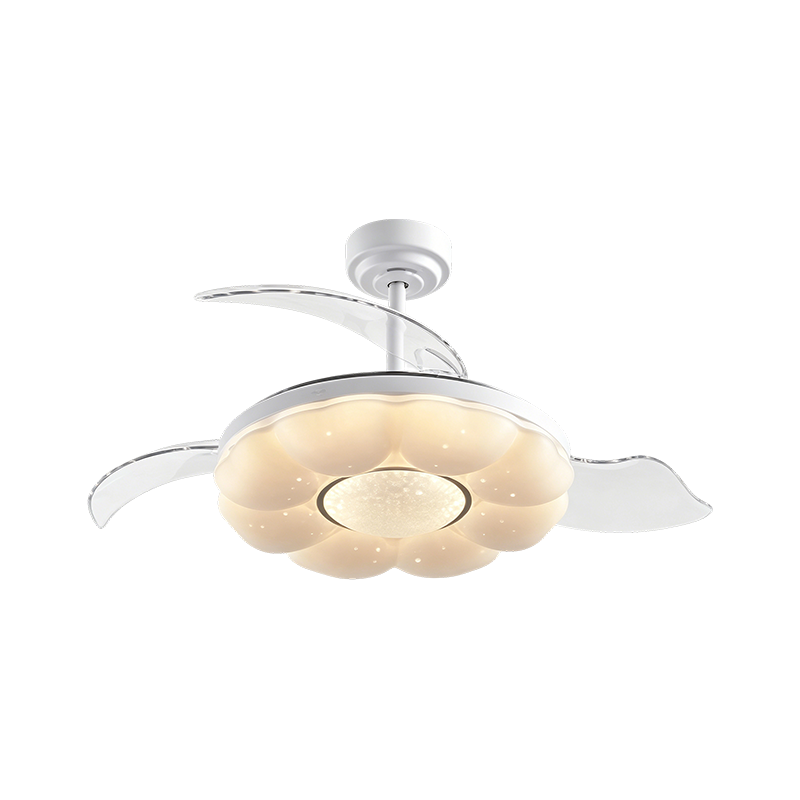
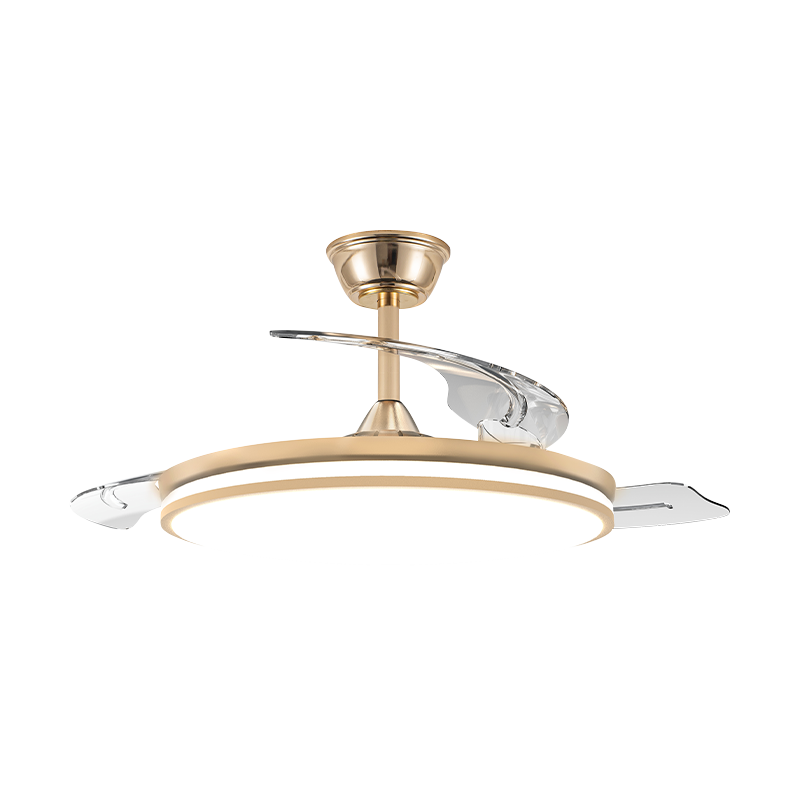 Quiet Retractable Ceiling Fan with Invisible BladesThe Quiet Retractable Ceiling Fan with Invisible Blades represents the pinnacle of modern minimalist design and air-cooling engineering. Specifically engineered for no...View Product →
Retractable blade designs are worth a look in small bathrooms for a second reason. When the fan is off, the blades retract over the light housing, which removes the visual mass of three arms sitting over a bathtub. In a room under 60 square feet, that matters as much as the airflow number.
Why a ceiling fan light cannot replace the exhaust fan
A ceiling fan moves air; it does not remove moisture. Exhaust airflow is measured in cubic feet per minute, and a fan with no duct connection has an exhaust value of zero. Bathrooms need a dedicated exhaust fan rated between 50 and 110 CFM depending on room volume.
| Function | Ceiling fan light | Exhaust fan | Heat lamp or fan heater |
| Air circulation | Strong | Minimal | None |
| Moisture removal | Indirect only | Primary function | None |
| Warming the room | None | None | Primary function |
| Built-in lighting | Standard | Rare | On some models |
| Power draw | 30 to 75 W | 10 to 30 W | Up to 1,500 W |
The fan's real contribution is mixing. By keeping air moving, it prevents a warm, saturated layer from settling near the ceiling and helps the exhaust fan pull moisture evenly from the whole room instead of one corner.
A common layout in renovated bathrooms is a fan light in the center of the room and a separate exhaust fan near the shower. That combination works well because the two devices are addressing different problems with no overlap.
Ceiling fan light for bathroom lighting: lumens, kelvin, and CRI
A bathroom fan light should land between 800 and 1,200 lumens when it serves as the room's general light. If the vanity has no separate mirror light, the fixture needs to reach 1,500 to 2,200 lumens to cover both ambient and task illumination.
Color temperature should sit between 3000K and 4000K. Below 3000K the room reads yellow and skin tones look dull; above 4000K the bathroom starts to feel clinical. Color rendering index matters more than most buyers expect: at CRI 90 or above, skin tones and makeup colors render accurately, which is why makeup mirror products are specified that way.
Integrated LED modules inside fan lights are usually not replaceable, so the rated operating life matters. Most quality modules are rated between 25,000 and 50,000 hours, which at two hours a day is well over a decade of use.
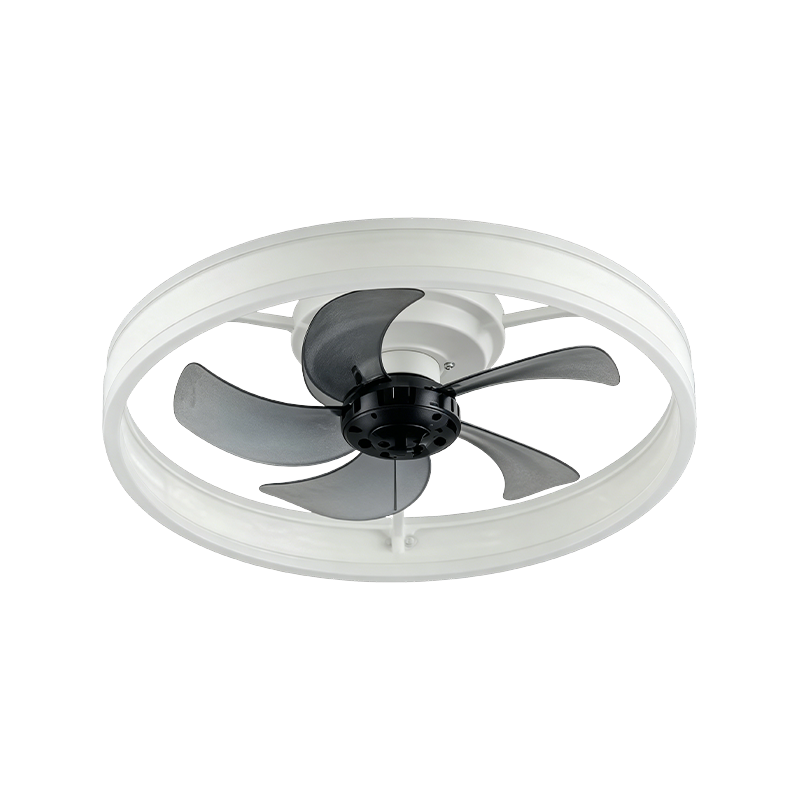 Downrod Ceiling Fan with LightCombining classic structural design with modern functionality, the Downrod Ceiling Fan with Light is the premier choice for high or vaulted ceilings. The downrod assem...View Product →
Dimmer compatibility is the other specification buyers overlook. A fan light with a non-dimmable driver will buzz or flicker when connected to a wall dimmer, and swapping the switch later does not always fix it. Where the room also uses bathroom lighting solutions such as anti-fog mirror lights, keep the two light sources on separate switches so each can be tuned independently.
Installation clearance, wiring, and controls
Keep blade tips at least 7 feet above the floor and confirm the circuit is GFCI protected before installation. Bathroom circuits are treated differently from bedroom circuits, and the fan light is a hardwired fixture sitting in a wet-room environment.
- Measure floor to ceiling and subtract the fan housing height plus the light kit depth. If the result is under 7 feet, use flush mounting only.
- Confirm the electrical box is rated for fan support. A standard light box is not designed for the dynamic load a rotating fan places on the ceiling.
- Verify the branch circuit carries GFCI protection. A licensed electrician should make that determination, not a product listing.
- Check whether the wall has a single switch or a dual control. A dual switch panel lets the fan and the light operate separately, which matters when the fan is used after a shower and the light is not needed.
- Test the remote or wall control before finishing the ceiling. Signal range drops in rooms with tiled walls and metal framing.
Downrod length is not adjustable after installation in most ceiling fan designs, so decide it before the box goes in. For bathrooms with ceilings over 9 feet, a 6 to 12 inch downrod positions the blades in the effective air zone without dropping them into the walking path.
Frequently asked questions
Can you really install a ceiling fan light in a bathroom?
Yes, provided the fixture carries at least a damp location rating, the blades are ABS polymer, and the installation is flush mounted or uses a short downrod. A dry-rated fan with wood blades in a bathroom will typically show bearing noise and finish damage within two to three years.
What size ceiling fan light does a bathroom need?
Most residential bathrooms fall between 30 and 42 inches of blade diameter. Rooms above 100 square feet can use 44 inches. A larger blade moving at a lower speed produces the same airflow with less noise, which matters in a room with hard tile surfaces.
Does a ceiling fan light replace a bathroom exhaust fan?
No. A ceiling fan circulates air but exhausts none of it, so its moisture removal value is indirect. The room still needs a dedicated exhaust fan rated between 50 and 110 CFM. The fan's role is to keep air mixed so the exhaust fan works evenly across the room.
How bright should the light be on a bathroom fan light?
Aim for 800 to 1,200 lumens for general illumination and 1,500 to 2,200 lumens if the fixture is also covering the vanity. Choose a color temperature between 3000K and 4000K and a CRI of 90 or higher for accurate skin tones.