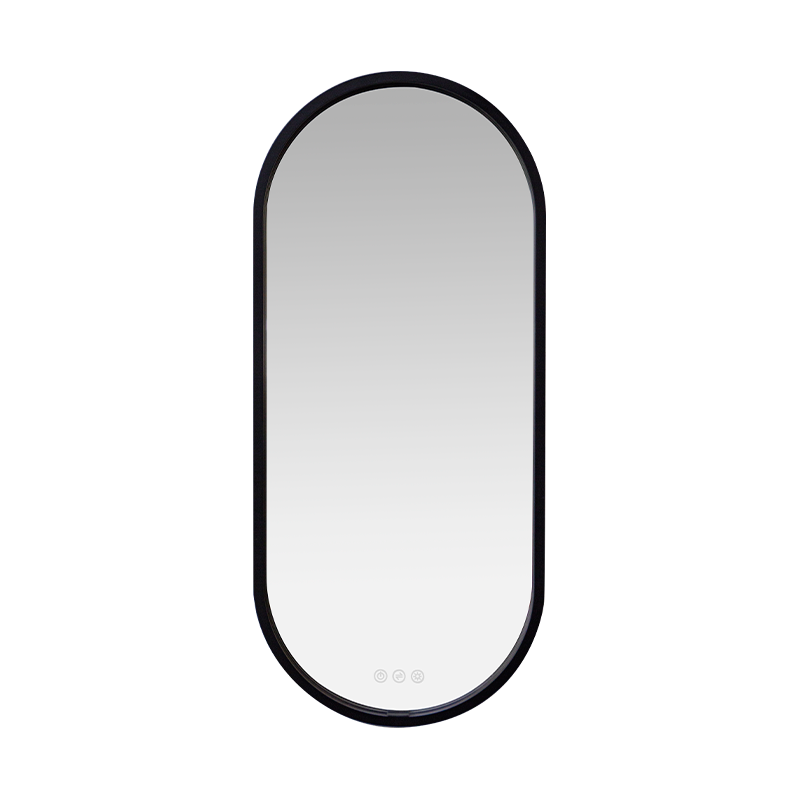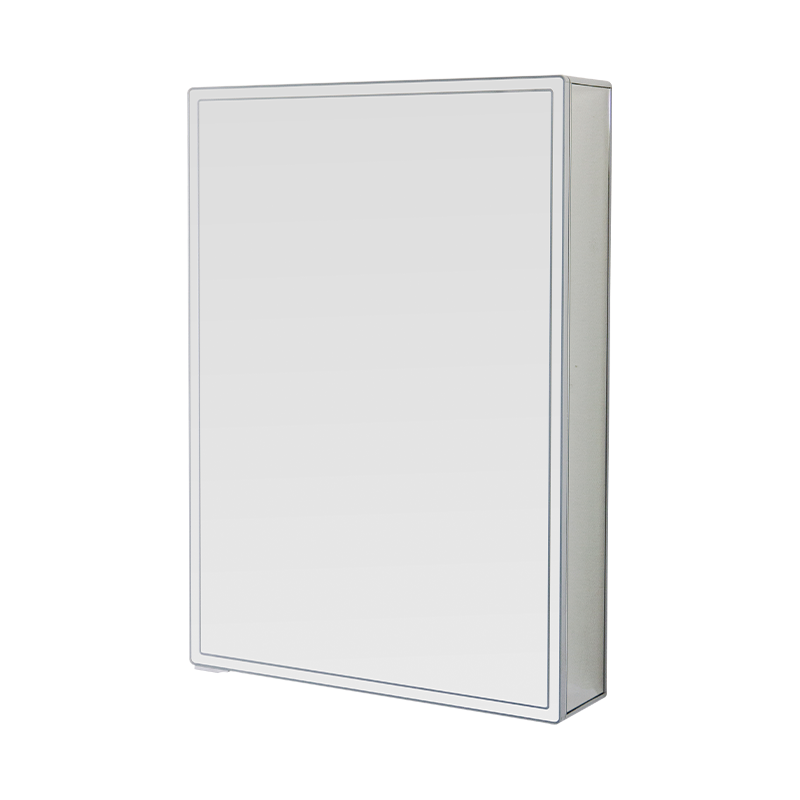

A bathroom mirror with backlight usually dies in one of two places: the LED driver goes dark after a few thousand hours, or water seeps behind the glass and corrodes the switch contacts. Both failures trace back to specs that were skipped at the ordering stage, not to a bad batch of glass. A bathroom mirror with backlight is a vanity lighting system with mirror glass attached, and the build of its LED channel, defogging pad, and power supply decides whether a hotel project gets ten years of service or a warranty claim in month eight.
Zhejiang Langpu Electric Technology Co., Ltd. manufactures LED mirrors and smart mirror cabinets for wholesale, hotel, and OEM/ODM projects. When an order comes in, the difference between a successful project and a failed one comes down to five numbers: IP rating, CRI, colour temperature, dimming range, and defogging coverage. Those are the numbers that should be written into the spec sheet before a purchase order goes out.
What a Bathroom Mirror with Backlight Actually Delivers
A backlit mirror is not a decorative add-on; it is a vanity lighting system, and it should be specified as one. Light sits behind the glass or inside a frosted edge, so it reflects off the person standing in front instead of throwing two hard beams from the front. For hotels, that uniformity is the reason backlit models replace double frontal lamps in renovated bathrooms.
The optical argument is simple. Two frontal lamps create two highlights under the cheekbones and a shadow line on each side of the nose. A backlit mirror produces one broad, even plane. In a small bathroom with one overhead light, that difference is visible every single morning, and it is why project buyers do not drop backlighting when they trim budgets. They drop cosmetic framing instead.
Efficiency is the second reason. A 600 x 800 mm backlit mirror typically consumes 18 to 36 W of LED power, while two 20 W front lamps plus a spare overhead spot can easily double that. The light is also closer to where it is needed, which means less energy wasted on the ceiling.
Components that decide the build quality
- Mirror glass, usually 4-5 mm, with no visible distortion within 50 mm of the edge.
- LED strip with a stable driver, mounted away from the water zone and rated for the local voltage range.
- Defogging pad that covers 60-80 percent of the mirror area.
- Edge treatment - aluminum frame, frosted acrylic band, or a true frameless build.
- Control switch, either touch, hand-swipe, or magnetic, with an IP-rated connector on the back.
IP Rating and Defogging Area: The Durability Specs to Check
IP44 is the practical floor for a backlit bathroom mirror, and the switch, driver, and cable connector should reach IP65 or better. The rating printed on the front of the box covers the whole unit, but the most common failure point is the connector on the back, where the mains cable meets the mirror. Spec the connector separately, and you avoid most water-damage claims.
Defogging area is the second spec that gets skipped. Buyers often ask whether a defogging function exists, but not how much of the glass it covers. A pad that only warms the centre leaves a fog ring on the perimeter. In a bathroom mirror with backlight, the defogging pad should run at 30-40 W for a 600 x 800 mm mirror and cover 60-80 percent of the glass.
Condensation is not the only source of moisture. Hot water hitting a cold mirror creates a temperature swing that pushes moisture into the gap behind the frame. An aluminum frame with a closed profile and a sealed back plate handles that cycle better than an open injection-moulded frame, which is one of the reasons metal-framed backlit mirrors appear so often in hotel specifications.
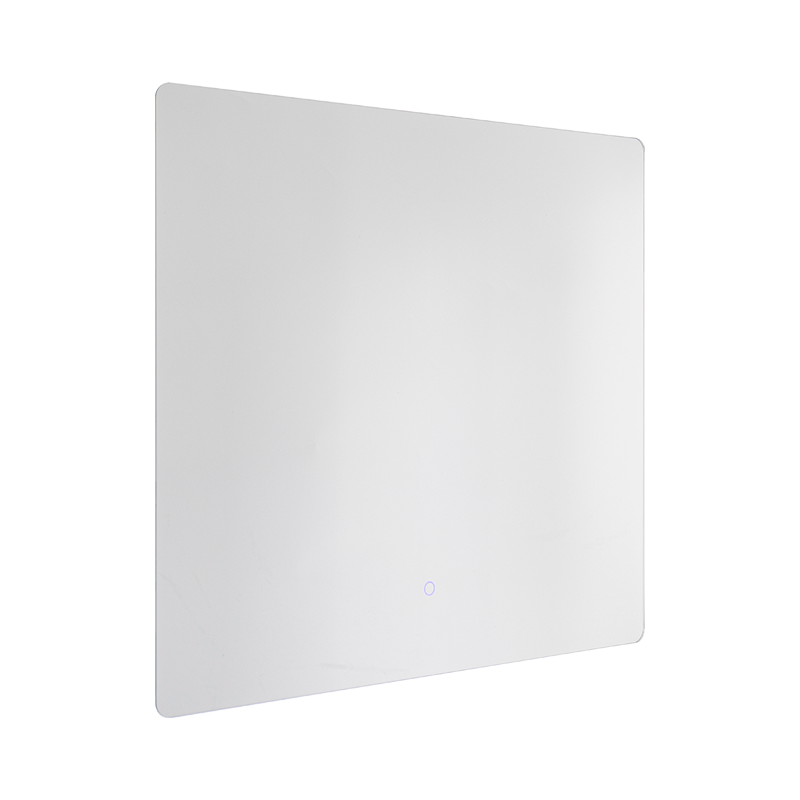 Smart LED Backlit Bathroom Mirror with Defogging and DimmingThis mirror addresses condensation and lighting needs with a built-in heating film and hidden LED strips, offering clear reflection and adjustable brightness in humid bathrooms.View Product →
CRI, Colour Temperature, and Dimming Range in Backlit Mirrors
For a bathroom mirror with backlight, a CRI of 90 and a colour temperature range from 3000K to 6000K should be the starting point, not an upgrade. CRI measures how accurately the light renders skin tones. Below 80, the reflection looks grey and sallow, which is exactly what people notice right before applying makeup or shaving.
Dimming behaves the same way. A mirror that only steps down to 50 percent is not useful at night, when you want a soft glow rather than a flood of light. Look for a driver that controls output down to 10 percent without flicker. Cheap drivers pulse at low brightness, and flicker is impossible to ignore in a mirror you stare at from 30 cm away.
The control method changes the spec, too. Touch switches are the most common, but a wet finger drops the accuracy of a capacitive panel. Hand-swipe switches avoid that problem and are easier to operate without leaving marks. Magnetic switches sit behind the door in a mirror cabinet model, which keeps the sensor out of the steam entirely. Each option has a place, but the sensor should be IP-rated no matter which one you pick.
 Dimmable Backlit Bathroom Mirror with Aluminum FrameFeaturing an aluminum frame that handles moisture cycles, this mirror provides uniform backlighting and defogging, suitable for daily grooming in wet environments.View Product →
Frame and Installation Specs for a Backlit Mirror
Aluminum frames are the safest frame choice for a backlit mirror in a wet bathroom, and a mirror always needs a solid wall behind it, not just tile adhesive. A 600 x 800 mm mirror with a backlight weighs around 6 to 9 kg before the frame. The wall condition matters more than the frame finish for a long service life. If the wall does not support that load, the mirror will eventually shift and crack the seal around the LED channel.
Installation also decides how durable the mirror looks on the first morning. The power cable has to be routed behind the mirror or inside a recessed junction box, with a waterproof connector that is accessible for servicing. In a renovation, that can mean adding a small cable channel before the tiles go up. Buyers who skip this step usually end up with a loop of cable hanging below the mirror, which collects water and lets it creep back into the fitting.
- Check the wall material: solid masonry or a reinforced stud wall, not a hollow tile flue.
- Confirm the cable route: hidden behind the mirror or inside a serviced recess.
- Verify the frame has a sealed back plate and a drainage path for condensation.
- Measure the switch reach from the basin edge so the sensor is easy to use.
| Frame type | Water exposure handling | Edge finish | Best suited for |
| Aluminum frame | High resistance to corrosion, sealed profile | Anodized or powder-coated | Hotels, apartments, project bathrooms |
| Frameless minimalist | Moderate; depends on edge sealing | Polished or frosted edge | Modern residential interiors |
| Frosted illuminated band | Moderate; diffuser must be IP-rated | Frosted acrylic wrapped around the glass | Visual statement lighting |
| Mirror cabinet integration | High; enclosed storage adds protection | Aluminum or ABS body | Bathrooms that need storage |
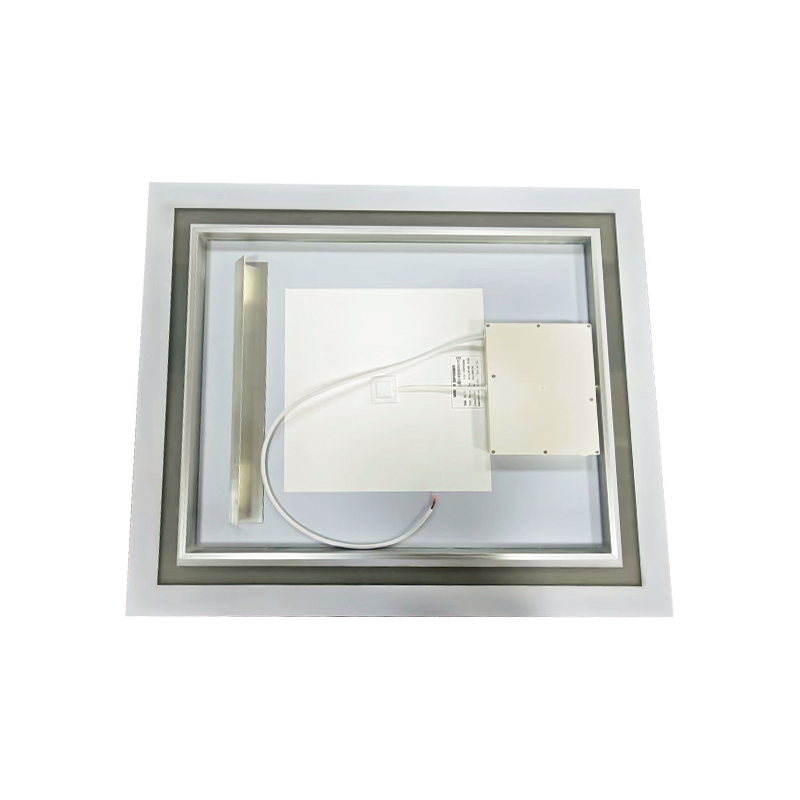 Aluminum Framed LED Bathroom Mirror with Defogging and BacklightCombining a sealed aluminum frame with smart defogging and dimmable LED lighting, this mirror ensures lasting clarity and adjustable illumination for bathroom use.View Product →
When a Bathroom Mirror with Backlight Becomes a Mirror Cabinet
If the bathroom already lacks wall storage, a backlit mirror cabinet gives you lighting and storage on the same wall footprint. A single-door version is enough for one basin; a double-door model works for a family bathroom or a long vanity. In either case, the mirror face and the storage box share the same waterproof build, so the lighting, defogging, and storage decisions are made together rather than in separate products.
For an OEM order, the cabinet body is the part that changes most. Langpu's smart storage mirror cabinets are built from aluminum alloy with waterproof single-door and double-door layouts, and the switch options vary from hand-swipe to magnetic control. A cabinet also changes the LED position: the light sits behind the door frame, which means a narrower illuminated band, so the defogging pad has to be adjusted to the new glass shape.
FAQ on Backlit Bathroom Mirrors
What IP rating does a bathroom mirror with backlight need?
A backlit mirror in a bathroom should be rated at least IP44 on the whole unit, with IP65 or better on the switch and cable connector. In shower-adjacent zones, look for a higher protection level on the back box.
Can a bathroom mirror with backlight be the main bathroom light?
It can carry part of the load. A backlit mirror provides task lighting for the mirror area, but it should be supported by a separate overhead light if the bathroom has no natural daylight.
How large should the defogging area be on a backlit mirror?
A defogging pad covering 60-80 percent of the glass is the correct target. Anything smaller leaves a fog ring on the outer edges after a shower.
Do I need a frame on a backlit bathroom mirror?
A frame is not mandatory, but an aluminum frame is the top choice for durable edge protection. Frameless options depend on edge sealing quality, and a frosted band can hide the LED channel if you want a visual line instead of a frame.