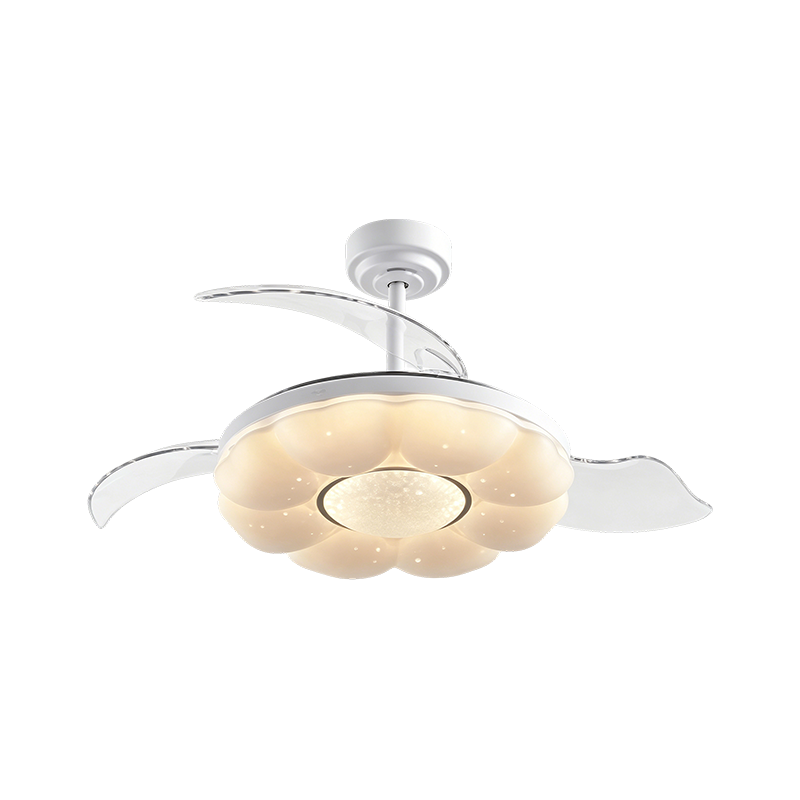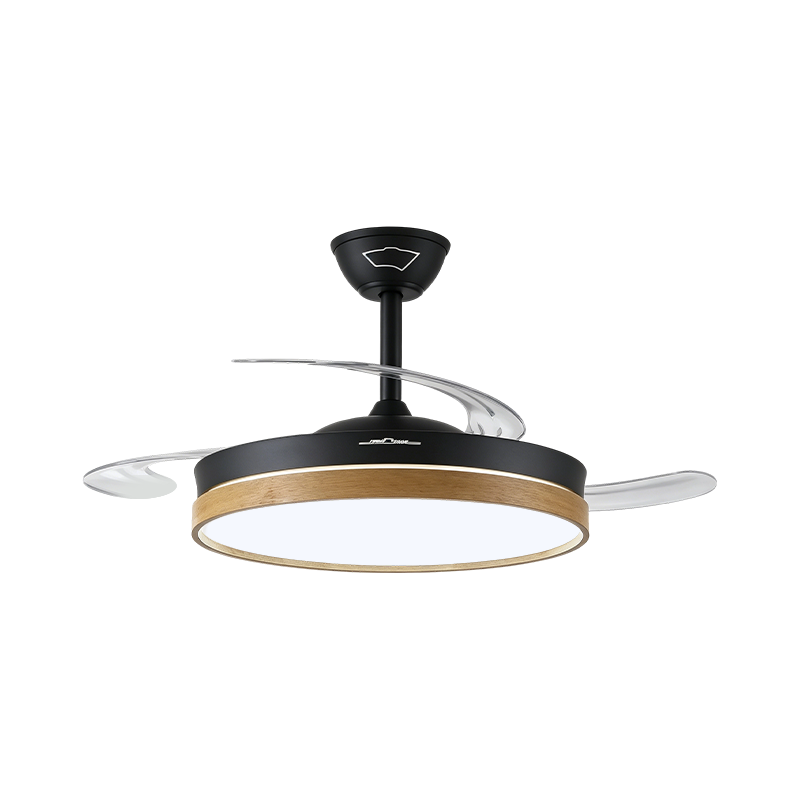

A dimmable LED fan light is a ceiling fan light fixture that allows brightness, and in many cases color temperature, to be adjusted rather than operating at a single fixed output. It combines the airflow function of a ceiling fan with a light source that can be tuned to different levels depending on the time of day or the activity taking place in the room.
How a Dimmable LED Fan Light Works
Simplified signal path: the dimmer or remote communicates with the LED driver, which adjusts the light module's brightness and color output independently of fan speed.
Dimming in an LED fixture is handled differently than in traditional incandescent lighting. Rather than reducing voltage directly across a filament, an LED driver adjusts the electrical signal delivered to the diodes, typically through pulse-width modulation, which rapidly switches the LEDs on and off at a rate too fast to perceive, or through direct current reduction depending on the driver design. The result is a smooth change in perceived brightness without the flicker or color shift that can occur when incompatible dimming methods are used with LED sources.
Many dimmable LED fan lights also include tunable white or multi-channel LED arrays, allowing color temperature to be adjusted independently of brightness. This is achieved by blending output from warmer and cooler LED chips within the same fixture, controlled through the same dimmer, remote, or app interface used for brightness adjustment.
How to Dim an LED Ceiling Fan Light
- Wall-mounted dimmer switch: Requires a dimmer rated specifically for LED loads, since dimmers designed for incandescent bulbs can cause flickering or an unstable dimming range with LED fixtures.
- Handheld or wall-mounted remote control: Common on integrated fan light units, allowing brightness and sometimes color temperature to be adjusted without altering the home's existing wiring.
- Smartphone application control: Available on fixtures with wireless connectivity, offering scheduling and preset brightness levels in addition to manual adjustment.
- Wall control panel paired with the fan's receiver: Used in fixtures where the fan and light share a single control module mounted separately from the switch.
Regardless of the control method, compatibility between the dimmer or control module and the specific LED driver in the fixture is the main factor determining whether dimming performs smoothly across its full range.
The Guide to Dimming and Color Control in LED Fan Lights
Dimming and color control are typically handled by the same driver system but represent two separate adjustments. Brightness dimming changes the intensity of light output, while color temperature control changes the visual warmth or coolness of that light, usually measured in Kelvin. A lower Kelvin value produces a warmer, amber-toned light suited to relaxation, while a higher Kelvin value produces a cooler, whiter light suited to tasks requiring more visual clarity. Fixtures that support both adjustments independently allow a single fan light to serve multiple purposes throughout the day without needing separate fixtures for different lighting needs.
Dimmable LED Fan Light vs. Standard Fixed-Output Fan Light
| Factor | Dimmable LED Fan Light | Standard Fixed-Output Fan Light |
| Brightness control | Adjustable across a range | Single fixed brightness level |
| Color temperature control | Often adjustable on tunable models | Fixed at one color temperature |
| Control options | Wall dimmer, remote, or app depending on model | Simple on/off switch or pull chain |
| Compatibility requirements | Requires LED-rated dimmer or matching control module | No dimmer compatibility needed |
| Flexibility across room uses | Adapts to different times of day and activities | Same output regardless of activity or time |
Ceiling Fans With Lights: Benefits and Best Uses
Combining a fan and light into a single fixture reduces the number of ceiling-mounted fixtures needed in a room and simplifies wiring during installation, since both functions share a common electrical box and, in many cases, a shared control module. This combination is particularly practical in rooms where ceiling space is limited or where a single point of installation is preferred over separate fan and light fixtures.
Practical Benefits
- Reduces the number of separate ceiling fixtures required
- Simplifies wiring to a single electrical box in many installations
- Allows brightness and airflow to be adjusted independently for different needs
- Suits rooms where ceiling space or mounting points are limited
Trade-Offs to Consider
- Light placement is fixed to the fan's central location rather than a separate fixture position
- Replacing only the light or only the fan motor independently is not always possible on integrated units
- Dimmer and control compatibility must be confirmed for both the fan speed and the light output
Why Choose a Ceiling Fan With an Integrated Light?
A combined fixture is generally chosen when a room requires both air circulation and ambient or task lighting from a single central point, such as a bedroom, living room, or home office. It reduces the total number of fixtures and control points in the room compared to installing a separate ceiling light and a standalone fan, while still allowing each function to be controlled independently through most modern control systems.
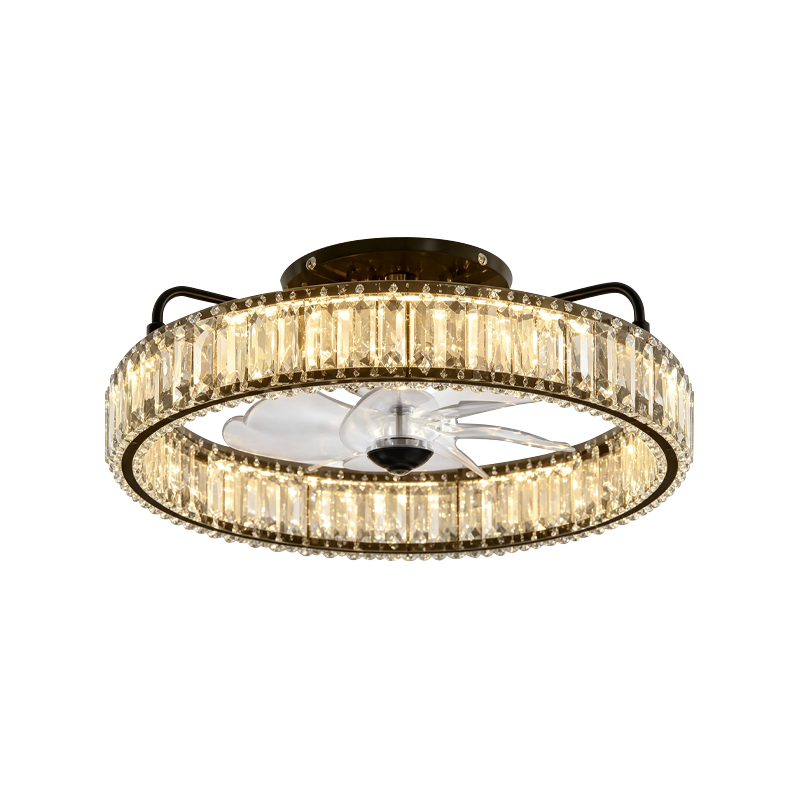
Technical Specifications and Key Performance Factors
| Specification | Typical Range or Consideration |
| Dimming range | Varies by driver design, with smoother low-end dimming on higher-quality drivers |
| Color temperature range | Tunable models typically span from warm to cool white on a single fixture |
| Control compatibility | Wall dimmer, remote, or app-based control depending on the fixture's design |
| Wattage and light output | Should be matched to room size and ceiling height for adequate illumination |
| Fan and light control separation | Some fixtures allow independent adjustment; others link both functions to one control |
| Mounting height clearance | Affects both airflow performance and light distribution across the room |
Application Scenarios
- Bedrooms: Dimming supports lower light levels for winding down, while brighter settings suit daytime tasks.
- Living rooms: Adjustable brightness accommodates both ambient evening lighting and brighter settings for daytime activity.
- Home offices: Cooler color temperature and higher brightness settings support task-focused work when available on tunable models.
- Nurseries and children's rooms: Lower brightness settings support nighttime routines without requiring a separate night light.
Picking the Right One for You
Selecting a dimmable LED fan light depends on matching the fixture's control options, dimming range, and light output to the room's size and intended use.
- Control method: Confirm whether the fixture uses a wall dimmer, remote, or app control, and whether existing wiring supports the required option.
- Dimming compatibility: If using a wall dimmer, verify it is rated for LED loads to avoid flickering or a limited dimming range.
- Color temperature adjustability: Decide whether a fixed color temperature or a tunable white range better suits the room's intended use.
- Room size and ceiling height: Light output and fan blade span should be matched to the room's dimensions for adequate airflow and illumination.
- Independent control of fan and light: Confirm whether both functions can be adjusted separately if that flexibility is a priority.
Installation Considerations
Installation should begin with confirming that the existing electrical box is rated to support the combined weight of the fan and light fixture, since ceiling fan mounting requirements differ from those for a standard light fixture. If a wall dimmer will be used, it should be installed on a circuit compatible with the fixture's LED driver, and any existing incandescent-rated dimmer should be replaced rather than reused. Where the fan and light share a single receiver, confirming that the remote or app is properly paired before mounting the fixture can prevent the need to access the ceiling box again after installation.
Common Mistakes and When to Replace a Ceiling Fan Light
- Using an incompatible dimmer: A dimmer not rated for LED loads is one of the most frequent causes of flickering or inconsistent dimming behavior.
- Overlooking driver compatibility during replacement: Replacing only a bulb or light kit without confirming driver compatibility can result in reduced dimming performance.
- Ignoring flickering or buzzing sounds: These are often early indicators of a failing driver or an aging dimmer switch rather than issues that resolve on their own.
- Delaying replacement after visible dimming inconsistency: A fan light that no longer dims smoothly across its full range, flickers at low settings, or fails to reach full brightness generally indicates it is approaching the point where replacement is more practical than continued troubleshooting.
Conclusion
A dimmable LED fan light combines adjustable brightness, and in many cases color temperature control, with the airflow function of a ceiling fan in a single fixture. Confirming dimmer compatibility, control method, and light output suited to the room supports smoother performance, while recognizing early signs of driver or dimmer wear helps determine when replacement is more practical than ongoing adjustment.
Frequently Asked Questions
How do you dim an LED ceiling fan light?
Through a wall dimmer rated for LED loads, a handheld or wall-mounted remote, or an app-based control, depending on how the specific fixture is designed.
Can any dimmer switch be used with an LED fan light?
Not reliably. Dimmers designed for incandescent bulbs can cause flickering or a limited dimming range when paired with LED drivers, so an LED-rated dimmer is generally required.
What are the benefits of a ceiling fan with an integrated light?
It reduces the number of ceiling fixtures needed, simplifies installation to a single electrical box in many cases, and allows brightness and airflow to be adjusted from one central location.
Can color temperature be adjusted on an LED fan light?
On tunable white models, yes. These fixtures blend output from warmer and cooler LED chips to adjust color temperature independently of brightness.
When should a ceiling fan light be replaced?
When dimming becomes inconsistent, flickering appears at low brightness settings, or the fixture no longer reaches full output, it generally indicates driver or control wear that replacement addresses more effectively than continued troubleshooting.
Are fan speed and light brightness controlled separately?
On many fixtures, yes, though some models link both functions to a single control, so checking the specific fixture's control design before installation is recommended.