
IP44 is the rating you will see on most LED mirrors properly sold for bathroom use, and for good reason. The second digit, 4, means the mirror is protected against splashing water from any direction, exactly the exposure a mirror above a washbasin faces every day. The practical question is not just what IP44 means, but whether it is enough for a damp environment, which is what most bathrooms are. The short answer is yes, with conditions: the rating must be certified, the mirror must stay out of direct spray, and the assembly has to be built as if it will be wet again tomorrow.
IP44 Is the Right Starting Point for a Damp Bathroom
IP stands for Ingress Protection, and the two digits are defined by the international standard IEC 60529. The first digit describes resistance to solid objects and dust; the second describes resistance to water. In an IP44 mirror, the first "4" means the enclosure stops objects larger than 1 mm, including small tools, wires, and bathroom debris. The second "4" means it resists water splashed against the enclosure from all directions. That is why IP44 is described as splash-proof.
| Rating | Solid object protection | Water protection | Bathroom meaning |
|---|---|---|---|
| IP44 | Objects larger than 1 mm | Splashes from any direction | Standard damp bathroom areas, mirror above washbasin |
| IP54 | Dust-protected, partial | Splashes from any direction | Same water protection, better dust resistance |
| IP65 | Dust-tight | Low-pressure water jets | Steamy poorly ventilated rooms, near direct spray |
IP44 handles a wet hand, splashes from a basin tap, warm steam, and everyday bathroom humidity. It is not designed for immersion or for high-pressure water. A mirror carrying IP44 should not be mounted inside a shower enclosure or anywhere a showerhead can spray it directly.
Bathroom Zones and Where IP44 Belongs
Bathroom electrical safety is normally described in zones. Zone 0 is the volume inside a bath or shower tray. Zone 1 is the space directly above it, to a height of roughly 2.25 m. Zone 2 extends 0.6 m beyond Zone 1 and usually includes the wall above a washbasin, where LED mirrors are most often installed.
In the IEC framework, and in national codes based on it, fixtures in Zones 1 and 2 require at least IPX4 water protection; the "X" means the critical value is the water digit, 4. An IP44 mirror provides exactly that, which makes it the code-compliant baseline for a normal bathroom.
What the zone system misses is the difference between a ventilated bathroom and a windowless one that stays damp after every shower. Even with the same zone classification, the damp room puts far more stress on the mirror. The same IP44 rating can look flawless for years in one bathroom and fail within months in another.
Why Damp Environments Are Hard on Ordinary LED Mirrors
Every LED mirror sees moisture during its life. Whether it survives for a decade or flickers after one humid season depends on three weak points.
The LED Driver Is the First Victim
The driver converts the mains supply to the low-voltage DC the LEDs use, and it is the most moisture-sensitive part of the mirror. When humid air enters the housing and condenses, water reaches the copper traces on the driver board and corrosion begins. The first symptom is flicker, then uneven brightness, then total failure. That sequence is one of the main reasons why some LED mirrors flicker and fail long before the LEDs themselves wear out.
Anti-Fog Performance Depends on One Sealed Assembly
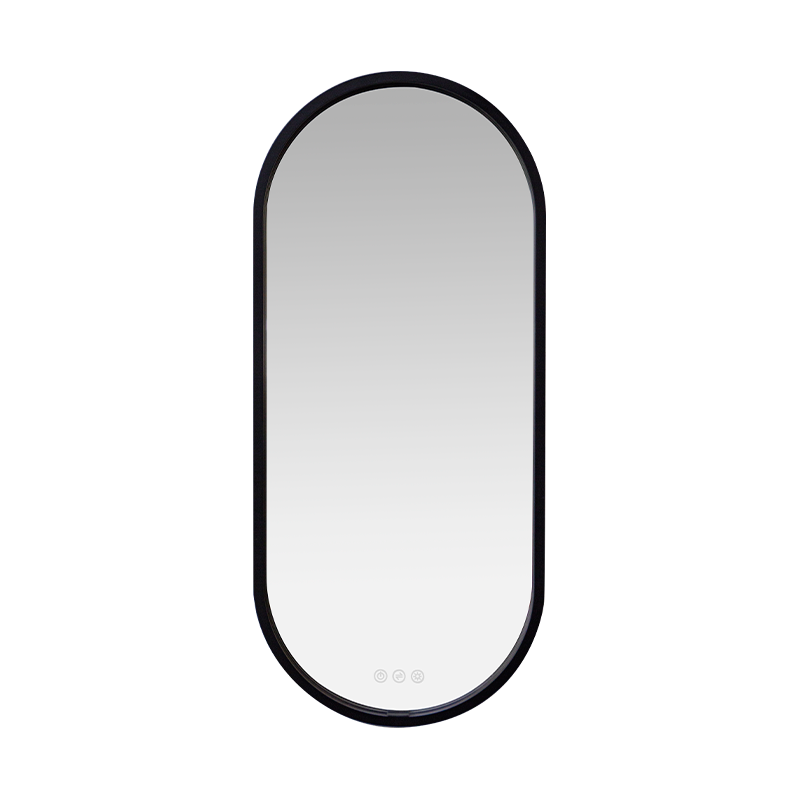
An anti-fog mirror keeps its surface clear by heating the glass slightly above the dew point so condensation cannot form. The heating element is a low-voltage film bonded to the back of the glass and wired inside the same enclosure as the LED strips. If that enclosure is not sealed, the moisture the mirror is meant to repel can attack its own circuitry. That is why the LED smart dimming defogging backlit bathroom mirror combines the anti-fog film and the backlight in one IP44-rated housing, creating a single protected electrical zone.
Tempered Glass Protects People, Not Electronics
Most bathroom mirrors are made of tempered safety glass, which collapses into small fragments instead of dangerous shards. That protects people, not electronics. The LED circuit and the driver depend on the IP enclosure, so when two mirrors both use tempered glass, the sealed assembly is what determines how long they last in a damp room.
For a fuller selection checklist, the LED backlit anti-fog mirror buyer guide covers sizing, features, and performance expectations before you order.
How to Verify an IP44 Rating Before You Buy
A printed IP44 label is easy to produce and hard to verify. The usual gap is an IP logo with no test evidence. Verification comes down to a few questions.
Ask for the IEC 60529 Test Report
An IP rating is meaningful only when it comes from testing. The IP44 water test applies a defined spray pattern at a set flow rate and duration under IEC 60529, and a manufacturer that genuinely rates a mirror at IP44 will usually have a report from a laboratory. If the supplier cannot produce one, treat the rating as a claim, not a fact. For export orders, also check the market marks: CE and RoHS cover European requirements, while North American buyers should expect ETL or UL listing.
Inspect the Frame, the Cable Entry, and the Backplate
Water ingress almost always starts at an edge: the seam between glass and frame, the cable entry, or the backplate joint. A well-built IP44 mirror seals all three. An aluminum frame is a good signal because it resists corrosion and gives the gasket a clean sealing surface. The cable ingress should use a grommet or gland, and the backplate should sit flush on the wall.
Light Quality Still Matters in a Damp Room
The IP rating says the mirror will survive the room; it says nothing about how well it lights the room. In a bathroom without strong natural light, the mirror is the main grooming light, so brightness, color temperature, and CRI matter. CRI of 90 or higher, with a switchable white temperature between 3000 and 6500 K, is a sensible starting point. The same review process used for smart LED mirror light features (brightness, color temperature, and CRI) applies even when dampness is the main concern.
Commercial Buyers: Compliance, Documentation, and Risk
Buying a mirror for your own bathroom is one thing; specifying mirrors for a hotel, apartments, or a wholesale batch is another. In commercial projects the IP rating becomes a construction document, not a marketing bullet. If an electrical incident occurs and the installed mirror does not meet the protection its position requires, responsibility can fall on the specifier, contractor, or building owner.
For volume purchases, keep three documents in the project file:
- The IEC 60529 test report for the IP rating.
- The declaration of conformity for the destination market.
- The installation instructions defining the allowed zones.
Some marketplaces also require these documents before a product can be listed for sale. For a standard washbasin wall, a certified IP44 mirror is usually the right specification. The LED smart dimmable backlit bathroom mirror combines a sealed IP44 backplate with dimmable backlighting, fitting both private bathrooms and light commercial projects.
If the project involves open showers, wet rooms, or bathrooms without mechanical ventilation, move the specification up to IP54 or IP65. The cost premium is modest and the margin of safety is wider.
The Takeaway: IP44, Certification, and the Right Specification
IP44 is the right baseline for a waterproof LED mirror in a damp environment, within the boundaries the rating was designed for: splash-proof, not submersible; a basin wall, not a shower enclosure; only as valuable as its test report. For a normal bathroom, a certified IP44 mirror is safe, durable, and code-compliant.
If a room is chronically damp or poorly ventilated, pay the premium for IP54 or IP65. If not, choose a well-built IP44 mirror and keep the documentation. The aluminum frame LED smart dimming defogging backlit bathroom mirror shows how a corrosion-resistant frame and a sealed IP44 housing work together in a humid room, the combination that keeps the electronics dry and the glass clear for years.