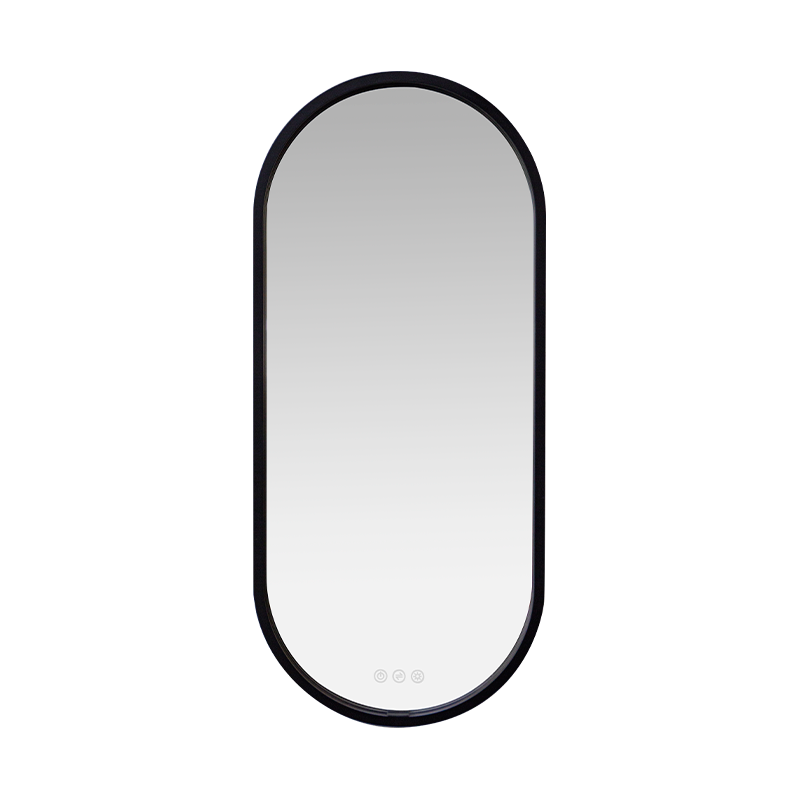

Why an Arch-Shaped Bathroom Mirror with Lights Earns Its Place
Walk into most bathrooms and the mirror above the vanity is the least considered object in the room. It is rectangular, it reflects, and after a hot shower it fogs over until someone wipes it with a sleeve. An arch-shaped bathroom mirror with lights changes the arrangement in three ways: the curved top softens an otherwise boxy wall, the integrated LED layer provides even front lighting that no overhead fixture can match, and a properly specified defogging system keeps the glass clear when you actually need it.
The conclusion for buyers is straightforward. The arch is a design decision, but the lighting system is a functional one. Evaluate the LED layout, color temperature, and anti-fog hardware with the same care you would give to a light fixture, because that is exactly what this mirror is. A beautiful arch with a weak light guide or an undersized defogging pad will disappoint you every morning.
What the Arch Shape Actually Does for the Room
Tiles, vanities, shower screens, and cabinet doors are mostly rectangles, which is why a curved mirror reads so clearly in a bathroom. The arch introduces a single deliberate curve that draws the eye upward and gives the vanity a focal point. In a small powder room, the shape makes the ceiling feel higher; in a larger bathroom, it balances the weight of a wide counter.
These are the practical benefits that justify the style:
- The curve reduces the visual mass of a large mirror, so a 70 cm arch does not dominate the wall the way a 70 cm rectangle does.
- The arched top creates a natural halo zone for perimeter lighting, directing light around the face rather than straight onto it.
- An arch works with both modern and traditional fixtures, from matte black faucets to brushed brass sconces, so it will not lock the bathroom into one trend.
Start with the Lighting System, Not the Frame
Most arch-shaped bathroom mirrors with lights use backlit or perimeter LED strips behind the glass. Light passes through an acrylic light guide and emerges as an even halo around the edge, which is preferable to a single ceiling bulb for grooming. The light comes from the direction you are looking, not from behind your head, which means no shadow falls across your face while you shave or apply makeup.
Color Temperature, Brightness, and CRI
Adjustable color temperature in the 3000K to 4000K range covers almost every bathroom need. Warm white at 3000K flatters skin and suits dim, spa-like lighting; neutral white at 4000K reads more clearly for shaving and skincare. A fixed-temperature mirror forces you to choose one setting for all situations, which is rarely enough. Brightness should be dimmable rather than fixed, because a backlit mirror at full output is needlessly harsh at night.
Color rendering is the quality that most buyers miss. If the LED strip has a CRI below 90, skin looks washed out and subtle color differences are hard to judge. The full picture of how brightness, color temperature, and CRI work in smart LED mirror lights is worth reviewing before you compare models, because these three values determine whether the mirror is pleasant or merely bright.
LED Layout and Light Diffusion
A continuous LED strip around the entire perimeter produces the classic halo effect that arch mirrors are known for, while vertical side strips alone leave the top of the mirror darker and create a more directional light. The diffuser matters just as much as the strip: a proper acrylic light guide spreads light evenly, while exposed chips produce visible hot spots. A LED smart dimmable backlit bathroom mirror with a well-made light guide is a useful reference for how smooth the halo should look before you accept a cheaper alternative.
Anti-Fog, Humidity, and Electrical Safety
Condensation is the main reason bathroom mirrors stop being useful, and no amount of LED lighting compensates for a fogged pane. An arch-shaped bathroom mirror with lights should include a defogging pad that warms the glass and prevents moisture from settling. The pad should cover most of the viewing area, not a narrow strip along the bottom; otherwise you get a clear stripe and a cloudy mirror above it.
Ask how long the pad takes to clear fog after a hot shower and whether it runs on a schedule or stays warm continuously. The frame material also matters in a humid environment. Powder-coated aluminum resists corrosion far better than bare steel, which is why the better arch mirrors use extruded aluminum frames and sealed edges.
Electrical safety is not negotiable. The mirror should be rated for damp locations, and the LED driver must carry certification for the destination market. Untested drivers fail first, usually at the connector, while the LED strip itself keeps working. For the specific checks to run before committing to a supplier, the backlit anti-fog bathroom mirror buyer guide lists the technical details you should verify in writing.
A mirror that combines an arched profile with proper defogging hardware is the right long-term buy. The aluminum-frame LED smart dimming defogging backlit bathroom mirror shows the level of equipment a fully specified unit should include.
Sizing, Proportion, and Mounting
Three measurements decide whether an arch mirror works in a given bathroom: its width relative to the vanity, its height relative to eye level, and the clearance the arch needs above it. Get the width right and the mirror frames the basin; get the height right and the reflection shows your face rather than the ceiling.
Width and Height Ratios
As a general rule, the mirror should be narrower than the vanity it hangs above, typically 70 to 80 percent of the vanity width. That leaves visual breathing room on both sides and gives wall-mounted sconces a place to live. For double vanities, two arch mirrors above each basin look more natural than one oversized arch, because the curve reads at a human scale.
| Vanity width | Recommended mirror width | Typical height |
|---|---|---|
| 45–60 cm (powder room) | 35–50 cm | 60–75 cm |
| 61–80 cm (single vanity) | 50–65 cm | 70–90 cm |
| 120–160 cm (double vanity) | 50–65 cm per side | 70–90 cm per side |
Mounting and Clearance
Mount the mirror so its center sits around eye level, roughly 150 to 160 cm from the floor for most adults. Because an arch rises above the center of the rectangle it frames, confirm there is enough clearance below any shelf or light fixture already mounted on the wall. The glass and aluminum frame of a backlit arch mirror can weigh 10 kg or more at common sizes, so wall anchors must be rated for the total load, especially on drywall or over hollow tile.
What to Ask Before You Order an Arch-Shaped LED Mirror
Whether you are buying a single mirror for a renovation or sourcing in volume for a project, the questions stay the same. Confirm the exact arch radius and outer dimensions, the position of the LED strip, the color temperature options, and the coverage area of the defogging pad. Then verify the electrical certification for your market and ask about the LED driver's warranty, because the driver is the component most likely to fail over the life of the mirror.
Project buyers should also ask about custom production. The arch radius, frame finish, and LED brightness can all be adjusted during manufacturing, but only if the supplier controls assembly rather than reselling finished goods. A manufacturer that already produces LED bathroom mirrors with dimming, defogging, and backlit light guides can adapt those modules to an arched profile without starting from scratch, which shortens lead times and improves consistency across large orders.
Where glare is a concern, the finish of the glass itself changes the lighting behavior. A frosted or matte surface spreads the LED output and softens reflections, which is useful in bathrooms with strong overhead light. The LED smart dimming defogging frosted illuminated bathroom mirror is a practical example of how diffused illumination keeps the mirror comfortable to look at while remaining fully functional as a light source.